Showing posts with label Pop. Show all posts

Tuesday, 25 November 2025

Short Stories (Remastered for 2022) - Yeah Jazz

In previous reviews, I've gone into a fair amount of detail about where my various tastes stem from. Nostalgia is a huge factor when it comes to informing my musical profile, but it's also a driver that makes me want to continue writing about music. I've explored numerous different eye-opening (or, rather, ear-opening) points throughout my life in the form of musical anecdotes, but I think it's time to go back to where it truly all began. Which is, technically, in 1991, the year of my birth.
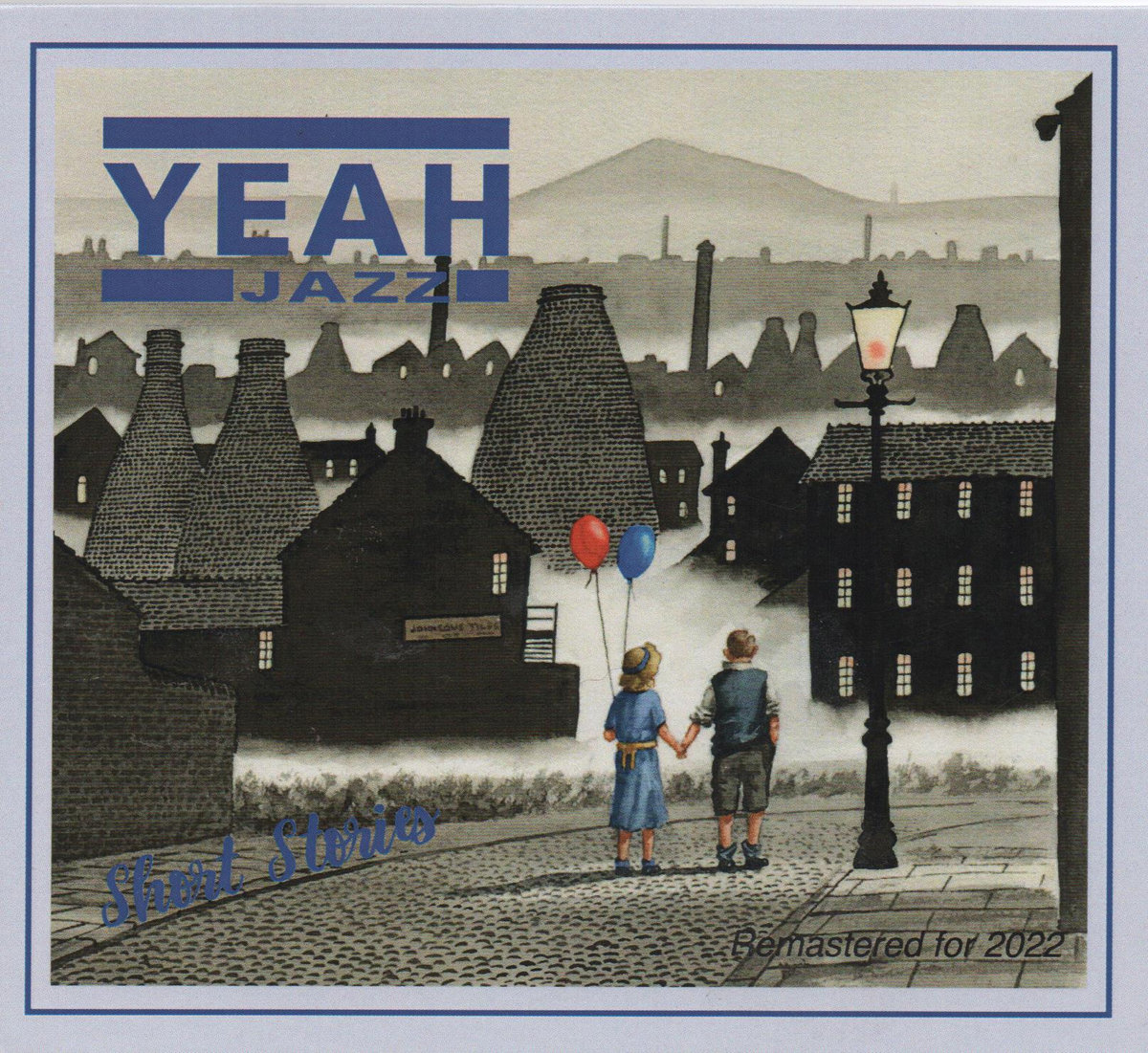


In 1991, Yeah Jazz (a relatively obscure band from Uttoxeter, Staffordshire) released Short Stories on cassette. After a few singles and an album in the 80s, this was their first release with new drummer Fred Hopwood, and the addition of a keyboardist, Dave Blant. To those in the know (not a single person reading this), everything is falling into place as to why I'm so intrinsically connected to this album in particular. But for those who don't know, maybe when I tell you that I am the nephew of Fred Hopwood and that Dave Blant taught me music from years 5-8 at Oldfields Middle School in Uttoxeter, where I grew up, you'll understand why these rudimentary facts about a little known indie band are actually relevant to me.

Some of my earliest memories of music are the songs from this album, playing on tape through the car stereo as we drive to a holiday rental in Wales, or blasting out of my dad's sound system on New Years Eve, or even a few nights before, heard live but not really consciously knowing it, as my uncle played with Yeah Jazz and his other various musical outfits at a local village club in celebration of his late December birthday. As my tastes evolved, I started to brush them off as 'just a local band', shunning their lack of clout and embarrassed by my ties to them, but over time I've reconnected. At uni, where I studied photography, they were a big influence for my final project (in which I created work about the tension I feel regarding my hometown), and I was able to draw upon the lyrics with a newfound insight and appreciation. Now, at the age of 34, I can see eye-to-eye with their vision and I feel like this music is in my blood.

A scan of the sleeve for the original 1991 cassette release of Short Stories

So if my intent is to review my first exposure to music, why am I working with the 2022 rerelease and not the original? Well, multiple reasons - strap in! (Or, alternatively, skip to the rankings if you don't give a shit.)

As well as these two 'editions' of Short Stories, there have also been 3 further releases (Songs from Biscuit Town, Distant Trains and a further Short Stories, the latter released by a German label under the alias 'Big Red Kite'), with almost every song appearing at least twice between the 5 total records, but in some cases 4 separate times. Perhaps the purest way to do this would be to review separately the Big Red Kite version and Songs from Biscuit Town, which feature only a single song in common (which, ironically, shows up nowhere else!) - but it was important to me to include all the songs that I have the most nostalgia for in one go. Separate reviews would mean segregating two absolute standouts on Biscuit Town from the rest of the pack on Big Red Kite. This would feel very wrong because I know them together from the original tape (see above). Now, speaking of tapes...

Distant Trains is an interesting one because it never had a release other than on cassette, and it's almost like a revised/abridged version of the 1991 Short Stories tape. The liners, much like the original Short Stories, were printed on assorted coloured cardboard in black toner (the roads in the above scan have been inked in with coloured marker afterward - music doesn't get more artisanal than that!). Eight of the ten tracks on Distant Trains are taken directly from the original 1991 Short Stories, but with two notable additions; Don't Let Me Leave and the title track. These are songs I'm reluctant to bar from my review; because of how much shared content there exists between the two tapes, I think of them as virtually the same album. Ultimately though, I struggle to want to review either of the two original cassettes, because they are the least accessible. Nostalgia or not, I can't currently listen to them in this format.

So this brings me to the 2022 Short Stories remaster. The highest quality audio, most accessible (it's on their band camp, along with Songs From Biscuit Town) and the most comprehensive tracklist. Almost every song is represented from the original two cassettes I knew as a child. Two exceptions are Speak To Me and Times Change (now only on the new edition of Songs From Biscuit Town) - these I can admittedly sacrifice as I'd basically forgotten about them, thanks to relying on CD rips and the original CD tracklist for Songs From Biscuit Town not featuring either (sidenote: this is so convoluted, it's probably not worth the three paragraphs' worth explanation). The final omission is Lorraine and Duane, which is a bit of a blow due to its uniqueness and exceptionally balanced structure, but not worth losing out on Distant Trains and Don't Let Me Leave for. Lorraine and Duane also features (consistently!) on Songs From Biscuit Town. The final consideration I had to make is that the rerelease inexplicably uses shorter edits of two songs (April and Hey Tray) - but I'm happy to take these as their original length counterparts.

My choice of edition effectively makes this something of a compilation review - but at this point, the lines are so blurred that a) it doesn't matter and b) I'm past caring.
  1. Billy Comes Of Age
  2. Orchids Bloom
  3. Thinking About You (aka Don't Stop)
  4. Hey Tray
  5. Distant Trains
  6. Don't Let Me Leave
  7. April (We've Changed)
  8. Rainbows
  9. Speak Softly To Me
  10. Brown Eyes
  11. The Great Escape
  12. Red Hot Polka (aka Lost At Sea)
  13. Angel
  14. Michael Forgive Me
  15. Cathy Smiles (aka A Summer's Day)
Total Points: 51/75
Average Score: 6.8

I'm not normally that responsive to lyrics, but I believe that Kevin Hand is unparalleled when it comes to storytelling - there's a reason it's called Short Stories. He has an ability with his ballads to go beyond simple narration; though the action and detail are definitely there, he's able to conjure such tangible atmosphere and utterly transport you to his headspace and his location, that his songwriting becomes straight-up poetry. And all with such unbelievable brevity. How does such a complete scene exist in my head when so few words are uttered? While it's true that I identify with much of his writing through living my own version of many of his experiences, there's also a lot I don't directly relate to. But through his colloquial yet carefully crafted lines, I really feel like I'm peering through his eyes and understanding his thoughts. Take the second verse of Hey Tray for example:

"Saturday, stuck in the launderette
Not noticing the notices she smoked another cigarette
And that photograph of you by the purple garage door
That coat you found - you'd strut around - do you wear it anymore?
And you know what? It's a funny thing 
The older I get, the less I feel I'm living"

This is actually pretty jam-packed for a Yeah Jazz verse, but it's extremely immersive. Hand frequently manages something I always aspired to do within my photography, which is to make a moment out of nothing. And it's scattered all over this collection of songs. Everything from describing "eyes as blue as blue skies" in Distant Trains, the "smoke from the chimney reaching for the sun" in Billy Comes Of Age, to the goosebumps I get listening to Thinking About You, where "we hit the road at 90 and the sun rose all around me". These lines, alone, have an understated beauty to them; I'm there, I can see it. But drop them into the full context of the music and you hit gold. You truly feel it.

Now, I don't think Yeah Jazz are especially talented instrumentalists, and this is evident in their solos. With the exception of my uncle's drumming, which is exemplary (I'm not being nepotistic I swear!), any facade of virtuosity is undermined by clumsy and unambitious ad libs. Blant's accordion solos are often clearly fumbled, lacking the dexterity and confidence needed to make a competent polka riff, and the constant prattling around the root note of the chord in guitar and keys solos alike feels amateurish and uninspired. But as an ensemble band, to create a mood and absolutely support each lyric with the ideal accompanying sound? It's this synergy that tells you they are a live band before they are recording artists. This is where they excel and actually surpass their individual skill levels.

So with this in mind, let's go back to that lyric from Thinking About You. "We hit the road at 90" is sung to what I would describe as a runaway drum rhythm, the brightest, slightly sharply-tuned piano chiming in the background, and a guttural, Johnny Cash-esque guitar playing the exact three notes to make the whole sky appear to swirl around you as you hurtle down the motorway and the sun hits from what feels like every direction at once. The song is tinted with the warmest of orange hues, and you're almost physically shielding your eyes as golden rays seep in through every window. This is the very definition of atmospheric.

My absolute favourite song is Billy Comes Of Age. This is a damn-near perfect song. Again, extremely simple in overall structure, but the story is told in so many more ways than just the already poignant, empathetic and naively articulate lyrics. The song builds from a lone, low piano, pausing for breath at intermittent junctures, tom tom rolls that remind me of Joy Division's Atmosphere, and a doubling of pace that feels perfectly timed to propel the story and step into Billy's shoes. The music builds with the story, and eventually reaches an apex of absolute liberation. There's a two-second pause, and then it kicks back in, ever so slightly (1bpm perhaps) faster, and you can feel the excitement and freedom filling your body. It is sublime.

My single critique of Billy Comes Of Age (which, in all other regards, is a quintessential coming-of-age song on par with Trashcan Sinatras' Obscurity Knocks, which is of similar vintage) is Kevin Hand's vocal style. Initially, when Yeah Jazz started up in the early 80s, they had a very blanket, undefined sound that blended them in with a million other white male British indie setups doing essentially the same thing. As he established more of an identity in his writing, he did the same with his voice. On the plus, he was able to curate a very distinctive style that exaggerates his midlands intonation and brings an undeniable degree of authenticity to his performance. On the downside, however, he bleats. He literally bleats like a sheep. He ruins the most beautiful lines by trailing off his notes in a stammered, downward glissando, which sounds so affected and performative that it can take you right out of the ambience they've worked so hard to establish. In a song as strong as Billy Comes Of Age, this vocal idiosyncrasy does the least damage - but as soon as you notice it once, you hear it crop up all over the album, and it's like pulling the one thread that could threaten to unravel the entire outfit.

But even with these shortcomings, the songs, generally speaking, work. Order has never really mattered to me - perhaps this is more due to how many configurations I've known them in over the years, or perhaps this is more due to their nature, each one very much being a 'short story' that the album title implies. Orchids Bloom is the most solid individual track, very well balanced and performed, with a brilliant chorus that works as much as a pop record as it does a mainstay in their unique soundscape. April encroaches on this as well, but with a bit more of a swerve into the polka/bluegrass lean much of the music has. The Great Escape and Brown Eyes epitomise this facet of their music, and while this influence can be polarising, I don't think it sounds weird among their less genre-specific work. Don't Let Me Leave contains an ample dose of this influence, and is one of the songs I most identify with as someone who once left that same hometown in search of freedom and a life beyond its confines.

I have the least amount of nostalgia for the newer additions, Michael Forgive Me and Angel, neither of which existed on the cassettes I knew as a child. The former, in particular, I don't especially enjoy thanks to the rolling and slightly limp repetitive guitar strumming and rhyming pattern that verges on twee. The one track I've thrown off the cliff though is Cathy Smiles, which was a favourite of mine as a kid. I used to love its lively, catchy accordion refrain, but now I view it as corny with positivity, and definitely the weakest of bunch lyrically. My dad always liked to pick apart the line "the grass grew around she smiled as she sat down on it" but for me, nothing is more of a cringe than life being "just a bus ride away".
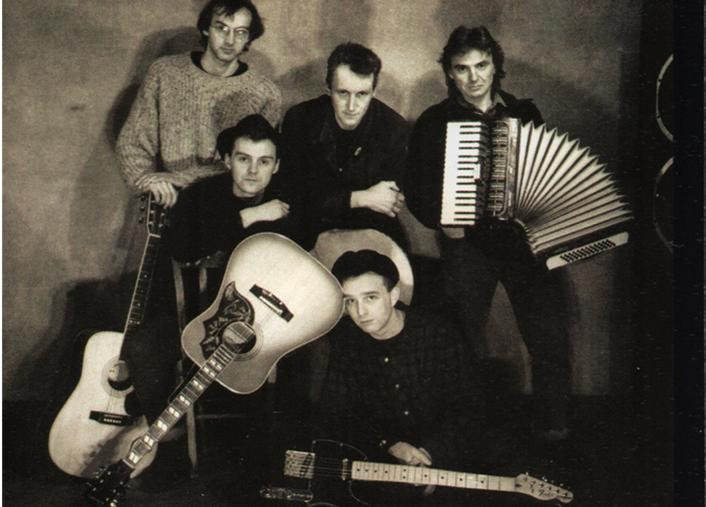

I knew I had a lot of feelings about this album but I didn't know until this review just how much I had to verbalise. I've been extra-critical in parts, but I think these assessments have ultimately been outweighed by the undeniable appreciation for the many, multiple aspects I love. Rather than summarising at this point to the extent I usually would, I'm going to do the unheard of and just straight up plug the band. They found a degree of commercial success in the 80s but this album and everything since have clearly been made to satisfy the creative buzz and for the love of performing, and if there is a reader viewing this who actually goes out of their way to give them a listen and find out for themselves what I'm on about, that will be worth a hundred times more than any review I could give.

So here's their bandcamp, go listen and purchase some music. And don't worry, it's not and has never been actual jazz.

Sunday, 2 November 2025

West End Girl (2025) - Lily Allen

Less than a month after my spontaneous Sheezus review, Lily Allen comes off musical hiatus and drops (I hate that term but it really did just 'drop') fresh new album West End Girl. And it's not just any album, but a break-up album (the juiciest kind) - and you just know, with it being Lily Allen, she's not going to hold back. To paraphrase a friend of mine, this girl wrote a song called Fuck You; she was not about to pull any punches. But what proceeded when I pressed play was a much more delicate exploration into her divorce from David Harbour than I had expected, one full of speculations, dwellings on small moments, and frank but understated revelations. It still has it's cutting moments, and definitely draws from a familiar well of honesty and openness, but what really comes across is how thrown off Allen is by the whole experience, and the uncertainty and fragility that ensues.

When I think of great break-up albums, the one that stands out to me is Björk's Vulnicura - a highly meditative and organic excavation into the breakdown of her own marriage, spanning the full breadth of the emotional spectrum from tenderness to despair. While West End Girl certainly exudes similar range, and is arguably every bit as dextrous in expressing specific, subtly divergent micro-feelings (although with less inner confidence it seems), it is actually Björk's fourth album, Vespertine, that I can draw the most comparison with*. This is due to the shared utilisation of small-scale electronic beats and intricate mixing to create a quietly complex yet unostentatious sound, and an overarching lyrical theme of family and everyday home-life that Björk has previously labelled 'domestic'. In West End Girl, Allen is constantly referencing her kids and struggling to work out how to filter her marital situation for them, and which of her family unit is currently at or away from home - it doesn't get any more domestic than this. The household setting becomes the headspace for the dilemmas and musings at the root of her anguish, serving to further amplify her pain because of how trapped within these boundaries the lyrics are. Even in tracks like Dallas Major, where she's clearly trying to move past them, she's ultimately subdued by those oppressive walls and incapable of escaping.

*I still plan to review both Vulnicura and Vespertine at a later date. Indeed, one of my objectives in starting this blog was to finally settle my preference between Vespertine and Homogenic. Spoiler: initial rankings of Vespertine don't exactly make this conclusive.

  1. Sleepwalking
  2. Madeline
  3. Pussy Palace
  4. Dallas Major
  5. 4chan Stan
  6. Fruityloop
  7. Just Enough
  8. Ruminating
  9. Tennis
  10. Relapse
  11. Nonmonogamummy
  12. Let You W/In
  13. West End Girl
  14. Beg For Me
Total Points: 45/70
Average Score: 6.43

Even though I've messed around with the exact placements of these songs incessantly, I always end up with a similar balance of colour distribution and a score with only one point or so difference. This tells me that the strength of this record is in the way the tracks come together to paint the overall pastiche, and not necessarily within the individual tracks. The lack of blue corroborates this - there is no standout, and I think this is largely owing to the small-scale, domiciliary approach that Allen has taken in portraying her divorce. There is very little in the way of sensationalism within the lyrics, and the sound suits this decision. Separately, the songs only say a fragment at a time, but those individual components come together to make, to reference Björk one more time, an army of Lily, that presents a unified front and wins you over in numbers.

The album's overall sound is so chilled out that if you took the vocals away, it would sound like a lo-fi playlist presented in high fidelity. When you listen with headphones, the soundscape is cocooning and comforting, with ambient beats, swelling, woozy-sounding synthesiser fills and the softest of pizzicato strings building up a safe environment for Allen's vulnerable storytelling. Pussy Palace and Relapse epitomise this vibe, the latter reminding me of some of the softer moments I gave a somewhat harsher critique to in Sheezus but, here, succeeding due to the immersive nature of the record. Occasionally, a more acoustic approach is taken; Just Enough is especially delicate thanks to this, while the chord sequence and fingertipped guitar in Let You W/In evoke the theme from Brokeback Mountain, the connection inherently carrying with it a similar degree of emotional weight and an air of reluctant resolve.

Sentimentality aside, the album has its venomous moments too. The bluntest lyric on the record, 'lie to me babe and I'll end you', punctuated with the cocking and subsequent firing of a shotgun, also happens to be my personal favourite. This is taken from Madeline, the song where we see the Lily Allen from MySpace, at her gutsiest and coldest, adopting an active role rather than a reactive, passive one. So many of her lyrics are about working out her feelings and recounting conversations, the kind of introspection that is inevitable in the throes of a break-up, but here she's pursuing, acting on her intuition and sparking a streak of revolt in a sea of contemplation. By the time we get to the final track, Fruityloop, Allen has come to terms with her disillusionment, and a full circle moment occurs when she finally has the revelation that 'it's not me, it's you', to quote the title of her second studio album.

After much debate, I settled on placing the title track and Beg For Me at the bottom. Though the song West End Girl contains the crucial, tangibly awkward and damning 'phone call' where the realisation sets in for both Allen and the listener, the song until that point is admittedly a bit plain and one-dimensional. Beg For Me is one of the severer sounding tracks, the pizzicato coming across much more hostile alongside the frosty sampling of Lumidee's Never Leave You - this track would certainly be a missing puzzle piece if it were absent, but its less exploratory and anecdotal format gives it more of a cookie-cutter materialisation compared to the rest of the album. The most difficult song to score was Ruminating, which could be placed first just as easily as last, depending on what aspect of the song most compels me at the time. As it goes, I've averaged it out at dead centre, weighing its whirlwind stream-of-consciousness highs against its generic, bludgeoned-over-the-head-with-autotune lows. It is an aural assault, but in the best way possible, considering that it possesses pretty much every trait I despise in modern pop music.


I've written all that and I've still hardly touched on several of the most memorable and profound instances, of which there are several many across the record. Lily Allen has done a superb job at hitting everything an artist can hit with a work about a break-up. Condense the story of an entire multiple-year-long experience down into a collection of 14 songs? Check. Remain cerebral enough to catch every emotions in the moment even while in the midst of turbulence and numbness? Check. Harness those emotions to create a concise but poignant body of directly conveyed and digestible content? Check.

All that, and to top it off, the music is banging. It's addictive to listen to. I don't really care too much about her personal life, but I'm somewhat invested in Lily Allen as a musician, and West End Girl feels like the apex of her artistic potential. I feel like I'm riding a zeitgeist, but not the one that's trying to sensationalise the scandal of her divorce (they can try, but the closest they'll get is quoting Tennis when she asks 'and who the fuck is Madeline?', and that doesn't really cut it). No, I'm riding my own personal Lily Allen zeitgeist right now, the one that is gushing over her growth, her ability to process and make art, and her authenticity throughout. And it's assembly is 10% my coincidental foray into a previous work of hers, and 90% this album's showcasing of her talent. I can't see there being another album this year that I end up liking more.

Monday, 27 October 2025

BEST ~Second Session~ (2006) - Koda Kumi

Compilation albums are usually out of contention for my review format. What's the point of fussing over what is already considered the 'best of' an artist's work, in an environment where the contents were never planned as part of the same project, and myriad themes, moods and genres co-exist in aggregate despite never being conceived together? Normally, there wouldn't be a point, because I'd have nothing to observe and write about, and any rating would feel hollow and superfluous. But what if there existed an album that was technically a compilation, but one by design and almost necessity, implemented as the final manifestation of a unique and deliberate project? Well, let me introduce you to BEST ~Second Session~ by Koda Kumi, a 'best of' that turns the 'best of' format on its head.


In late 2005, relatively freshly established J-pop artist Koda Kumi embarked upon her 12 Singles Collection project, where a new single was released each week from December 7th to February 22nd. This plan had 'publicity stunt' and 'cash grab' written all over it, or at least it would have if her primary audience was found in the western world. But for the 'Japanese Christina Aguilera' (I do not remember where I read this comparison, but I definitely saw it somewhere), who was more sophisticated and voice-driven than your typical idol, this was the perfect way to capitalise on a culture who loves their pop icons and amassing a personal collection, but also to show off as a singer and creative talent. With each single's artwork featuring Koda boldly styled in a colourful, avant-garde take on a costume from a different country's culture, the visuals were every bit as beguiling as the idea itself. It could be dismissed as a gimmick, were it not for the fact that the music is genuinely rather good.
  1. Someday
  2. D.D.D. (feat. Soulhead)
  3. Kamen (feat. Tatsuya Ishii)
  4. Love Goes Like
  5. Lies
  6. Birthday Eve
  7. Wind
  8. Candy (feat. Mr Blistah)
  9. Ima Sugu Hoshii
  10. Shake It Up
  11. You
  12. No Regret
  13. Feel
    (Exempt from total score: Introduction To The Second Session)
Total Points: 45/65
Average Score: 6.93

Something I love about popular music from the naughties - especially that with an r&b influence - is how instantly identifiable it is; so often, there is such a distinct and incriminatingly dating sound. This certainly shows up throughout, unavoidably so in Candy and Love Goes Like, but because of how all the music is so sweeping and radically unrelated in style, whilst still somehow maintaining its shape as a uniform project, the datedness doesn't set in. Or rather, it is cushioned, by the through thread of Koda's immaculate voice, the ultra-modern (modern but decidedly not futuristic) sound of each track's instrumentation and, to the credit of Koda's management, the image projected through the videos and artwork. Eclectic, vibrant, exciting, but always Koda through and through - that is what this album is, to the eyes and ears alike.

Though D.D.D. borrows its verse melody from the already frequently reimagined western mainstay Lady Marmalade, these are perhaps the least impressive moments of the song. With each other section, it transforms into a whirlwind of a pop track, breathing fantastical life into tried-and-tested chord progressions with earworm melodies and full-throttle, undying energy that make this the absolute pinnacle of all upbeat get-up-and-dance tracks. Even with the occasional r&b moment, pure pop is the predominant sound. But this exists as a spectrum within itself, and D.D.D. sits somewhere in the middle - right between the sugary, squeaky-clean bubblegum of Wind and Birthday Eve and the quirkier, heavily mixed and scratched Lies. All of these songs sound correct in each other's company, becoming a cross section of Koda's tastes and talents, and a real showcase of her dynamism.

My lower rated tracks are among the best known from this era - You, the lead single of the project, remains the best-selling of the individual releases and something of a signature ballad for Koda, while No Regret, which also performed well, found an extra lease of life as an anime opening theme. Though no less competent than the rest of the album, the former is a little on the bland side (especially compared to the heady and indulgent duet Kamen, a far more satisfying ballad) and the latter being rather hard and fast, very constant with its orchestra hits and techno-esque timbres, but without much resolution. Feel seems to combine both of the other bottom songs' flaws, being anomalously bland in an album full of sugar, spice and full-bodied flavour.

Finale track to both the album and the project itself (the orders of original release and compilation tracklist are different), Someday, makes for a dramatic and memorable ending. Rich string flourishes, teeter-tottering piano chord phrases and silky wah guitar bring together elements from disco, house and funk respectively, lending themselves to the most elegant j-pop imaginable. This makes for a timeless and grand sound, that stays with you long after you finish listening. Furthermore, each of these instrumentations feature elsewhere on the album, making Someday the most apt and gratifying way to end the proceedings and consolidate the whole project. It's everything a closer should be, and the perfect way to encapsulate the overall energy of the compilation without repeating anything or being too literal.

The cover photos for each of the 12 separate single releases

This capsule collection of music is an inimitable relic of its time in terms of concept, while the fruits of it are anything but, their overall coalescence managing to straddle multiple sub-genres and transcend time. Such a bold idea surely won't be attempted again, certainly not in the age of digital music and streaming. Because it stands out to me as such a singular entity, I've struggled to get into much more of Koda Kumi's music. Stepping outside the Second Sessions bubble I've somehow found myself within would almost feel a betrayal of my love for it. This probably has a lot to do with how unavailable her music was to me at the time it was made. My CD copy of this was imported from Japan, purchased over eBay for an amount I would not usually feel happy paying for an album I'm buying blindly, and it was almost entirely gambled on the promotional artwork (above) I'd seen online, and the fact I knew of Koda from when she sung the Final Fantasy X-2 theme. This gamble, of course, paid off for me - but, for so long, it was the only access I could really afford myself to her music. Now, of course, I have Spotify, Youtube, full 2025 internet access. I could even follow her on instagram probably. But it's scary to venture out of this project's bubble when I look around from within and see something verging on perfection. Sure, I've been critical, but it really does sparkle to me. When I ranked it and saw the score, I was initially surprised, but when writing about it and breaking down the music, it makes so much sense to me that I rate it all so highly. One day I'll branch out and absorb a wider discography of Koda Kumi, but for now I'm more than happy to stay here and relish in the glory of this incredible and unlikely 'best of' album, that defies the very archetype it constitutes.

Sunday, 28 September 2025

Sheezus (2014) - Lily Allen

Sometimes I get so bogged down with nostalgia and trying to weave together some kind of grandiose review to end all reviews that it all starts to feel a bit stale. The albums I want to discuss are usually steeped in meaning for me, or have had verdicts on them marinating and maturing for several years (or even decades). I'm also aware that I'll generally have more to say about something I like, and that there's little point in reviewing an album I don't much like, given the whole point of this blog is to compare my favourite albums. This is a deadly combination that leads to insane writers block and, if dwelled upon too much, a sour taste for the music itself. So I thought I'd keep things fresh and review an album I've never listened to until two days ago.

I was a MySpace teenager (like you can't tell from the customised transparent banner I made for this blog) so I'd first heard of Lily Allen when she was on the brink of her breakthrough. Initially defined by a bold personal style (cocktail dress and trainers) and a quirky, vintage, ska-infused sound, Lily Allen was one of the biggest success stories of the indie music zeitgeist of the 00s. It soon became clear though that she wasn't the sort to sit primly in the niche she'd carved out for herself with her debut Alright, Still, and by the time Sheezus came around, Lily Allen had thoroughly made sure that her signature was her attitude, not her aesthetic.

Sheezus is essentially an electropop album - emphasis on the pop, with the electro seeping through in a largely subliminal way. You don't really notice how deeply you've been swimming in the electronic beats until URL Badman's dubstep chorus kicks in and tells you it's time for air. Typically the only electro not to manifest with overbearingly incessant energy is the kind of ambient, über-chill trip-hop of Massive Attack and the like. Sheezus, however, uses beats in a subtle, supportive way that maintains a calmness that isn't intrinsically atmospheric, instead finessing the music round the edges and helping to add flair to otherwise simple melodies. Together with Allen's clean, blasé style of vocalisation and quippy, unexpected rhymes, the result is a surprisingly sophisticated modern feminist manifesto of a nearly 30-year-old Lily Allen speaking her mind once more.
  1. Hard Out Here
  2. Insincerly Yours
  3. Air Balloon
  4. Close Your Eyes
  5. As Long As I Got You
  6. Somewhere Only We Know
  7. Our Time
  8. URL Badman
  9. Sheezus
  10. Silver Spoon
  11. L8 CMMR
  12. Take My Place
  13. Life For Me
    (Exempt from total score: Interlude)
Total Points: 38/65
Average Score: 5.85

Lily Allen is never short of statements to make, but the real headliners are the ones that pack the most punch outside of just their lyrical content. This makes Hard Out Here the clear standout, a bold pop banger with social commentary that still feels current and relevant, Allen's sweet, crooning vocals licensing her to be extra cutting in her critique. Insincerely Yours is similarly audacious, but laid back and funky, less of an outright anthem but just as memorable. This is where the electronic timbres work best, elevating a pretty standard tune to match the excellent lyrics by beautifully balancing layers of intricate effects and precision beats. Close Your Eyes functions as an updated take on the 90s r'n'b slow jam, like TLC's Red Light Special, but white, British and post-childbirth - a little more self-deprecating and dysfunctional, but every bit as transparent and lustful, and polished with the same pristine sleekness that exemplifies the best of the album's tracks.

There are two main ways that the album wanes for me; one is in the clumpier overproduction suffered in songs like L8 CMMR and Sheezus - these songs rely a little too heavily on discombobulating effects and an almost satirical use of autotune and synth sounds that come across like intentionally sarcastic musical tropes. If they were positioned later in the tracklist, they'd take me right out of the listening experience. Speaking of which, the anomalously jolly and acoustic As Long As I Got You absolutely does this, smack bang in the middle of the album. The song itself is innocuous but its presence detracts from the album's otherwise synergistic mood.

The other way the album wanes is through an inherent sleepiness that dusts the slower, less vibrant songs, an issue that I also observed in 2009's It's Not Me, It's You. Allen's voice does not fluctuate in tone track to track, always set to a deadpan, lightly sassy medium-low. So when a lower energy song comes along, she's not working overtime to sell it, instead depending on the construction and content to do the work. Take My Place and Life For Me, though palpably heartfelt and personal to Allen, lack the necessary interest to keep them from being unfortunately boring, electronic embellishments unable to help out when the material is so languid to begin with. You can't aim for beauty in simplicity when Hard Out Here is right there on the same record.


Though not everything on the album is to my taste, I appreciate when an artist can really let me into their world and see things from their eyes, and that is what Lily Allen does best. She does it so directly it almost feels cheap - in fact, it does feel cheap in the songs with a less bombastic sound. But in the rest, master directional decisions and clarity of vision elevate Allen's opinions and observations into a true art, something that is as catchy and poppy as it is succinct and important. I don't think diving into music I've never heard before will always work for me - I think there was an element of luck this time round. I'm not always going to be able to just pick up an album and expect to have things to say about it. But I feel refreshed for having done it this time, so I'd say the experiment was a success.

Tuesday, 8 November 2022

Aquarium (1997) - Aqua

A few reviews ago, I wrote that while I may come across like an insufferable hipster, my wider taste in music would debunk such a title, and that future reviews would aim to prove this point. Well, that time has come. I'm fully prepared to be stripped of any perceived trendiness, my taste to be questioned and my reputation tarnished, and you should be too. Because I, without the slightest hint of irony or guilt, actually rather like the music of Aqua, and I'm about to tell you why.


In 1997, Barbie Girl hit the airwaves and filtered through to the limited outlets accessible to 6-year-old me, which just goes to show how much of a mega-hit it was. Outside of the local bands, orchestral music and occasional 70's stuff that my parents listened to, I'd heard of Barbie Girl, two or three Spice Girls singles and was aware there was a band called Boyzone - until I started pursuing music on my own, this was really all I knew. And when you're a fledgling music enthusiast, knowing that you want to fly free of the acoustic nest your parents curated but not really knowing what the world has to offer, you gravitate to what little you recognise. I vividly remember being in a charity shop (Scope, if you wanted to know) in maybe 2001 and seeing the cassette tape of Aquarium up on a rack of pre-owned tapes for, I want to say, £1.50. I asked the volunteer to reach it down for me, even though I was taller than her (I knew she had a kick stool but she didn't use it). I was drawn to the bright colours, the band's eerie glow, and Lene's tall hair and bushy eyelashes, and the cartoony logo with the eye motif was very my kind of thing. I checked the back, recognised Barbie Girl and suppose I must have thought to myself, "I understand what this is". And that is the story of how I came to purchase my first album.

Similarly to how I feel regarding OPM's Menace To Sobriety, I don't believe my appraisal of the music is softened by nostalgia. If anything, I have a better appreciation now for the musicality of the more blatant schtick songs, which I definitely shunned quite early into my development, well aware that there was nothing 'cool' about listening to Barbie Girl in the 21st century. Ultimately, it's the quality that keeps me coming back, and you're about to see just how highly I regard it.
  1. Good Morning Sunshine
  2. Be A Man
  3. Calling You
  4. Doctor Jones
  5. Roses Are Red
  6. Lollipop (Candyman)
  7. Happy Boys & Girls
  8. Turn Back Time
  9. Barbie Girl
  10. My Oh My
  11. Heat Of The Night
Total Points: 37/55
Average Score: 6.73

You might have noticed that this album has received my highest score yet. Given how my system works, it's very high indeed (I'd say anything above 6 is high, I certainly don't see anything breaking the 8 mark), and there's a part of me that feels a bit incredulous about this, even though I scored it myself and stand by my verdict, just because of the general consensus that Aqua are something of a gimmick band. Which isn't an unfounded myth - songs with subjects including a plastic doll, a fictional archeologist, and a medieval kingdom don't exactly make for a cultured listening experience. Combine with these singles goofy, slapstick music videos that exaggerate the band's wackiness and sense of humour, and it's easy to brush them off as a juvenile act that caters to only the most low-brow of audiences, probably containing more children than adults. But there's a lot more to the band, and this overarching tawdriness is, in fact, just the most pronounced of many concurrent facets they possess.

Before we look any closer, let's reinterpret their zaniness by declaring them self-aware, tongue-in-cheek entertainers who want to create positive music designed to be danced to and to put a smile on listener's faces. I don't think this is far fetched at all, and if this is the goal of their music (and its corresponding promotional videos), mission accomplished. Now, let's focus on some of the brilliant qualities Aqua have that often go overlooked. Firstly, Aquarium is one of the most flawlessly produced albums I've ever heard - not one note, whether sung, played or programmed, is misplaced or nonchalantly fumbled, and even though it's fair to call this an album of electronic music, it never feels overly mechanical or computerised. The record has a consistent, distinct flavour, remaining bright and slick but still incorporating a variety of timbres and moods - ranging from the familiar eurodance tropes of Roses Are Red to contemplative, wistful ballads like Turn Back Time, and even one (admittedly ill-judged) latin-influenced song. While future endeavours feel a little more detached from song to song, this record remains fluid (excuse the pun) and succinctly part of it's own bubble (excuse that pun too please). No track is laboured or excessively long; they are expertly judged by in-band production duo Søren Rasted and Claus Norreen to maintain the fit and feel of their vivid, caricature image during this era.

Aqua's greatest asset is, or should I say are, their lead vocalists, and the sheer contrast between them. Barbie Girl epitomises the extremes of this schism, with Lene's high-pitched, somersaulting voice feminised further still under the guise of Barbie, while René's gruff, baritone Ken provides a macho counterpoint full of swagger and attack that serves as the perfect yin to her yang. This polarity makes their vocals perfect for character acting, and we see it time and time again in the likes of My Oh My, Doctor Jones and Lollipop (Candyman), to name a few examples. René's contributions often err on the edge of rap, and fully take this form in the Middle 8 of my personal favourite track, Good Morning Sunshine. Strangely enough, it's the least cheesy he sounds on the entire album, helped in no small part by the ballad's lush, accessible but poetic imagery and velvet-rich yet relaxed tone - something I'm sure a lot of people would never have expected to be said about an Aqua song! For Lene, Aquarium acts as something of a showcase, giving her chance to really exercise her vocal elasticity. In addition to her trademark brazen soprano, she takes on a softer, more delicate approach in Be A Man, plays up her sugary intonation in Lollipop (Candyman), and shows she can be an absolute powerhouse when she belts out an almighty sustained note during the climax of Calling You.

Along with Good Morning Sunshine, Be A Man is a beautifully performed and vulnerable model of a 90's pop ballad, with the addition of glistening electric piano and expertly dispersed backing harmonies to add a cosy yet sparkling aura to the sound. One notable omission from the original album is Didn't I, a bonus track featured on many re-releases of Aquarium, and bumped up to part of the core tracklist on the 25th anniversary edition vinyl. Had this qualified, it would have been a third 5-pointer for me, notching the album up to an even higher overall score (an astounding 7.0). This song, an up-tempo dance track in their familiar euro flavour, is actually closer in subject matter to Aqua's more serious, slower songs, and takes full advantage of Lene's sweeping vocal ability. Their kitsch phenomenon Barbie Girl, corny and overplayed though it is, still deserves credit for how well assembled it is, as well as it's playful lyrics and sheer audacity. The only real flop is Heat Of The Night; it doesn't matter how big a pinch of salt you take the band with, this will always be cringe-inducing - as packed as it is with every imaginable Spanish stereotype, it feels more exploitative than inspired, and would definitely be inconceivable today.


I haven't set out to convince anyone to fall in love with this album - whereas with City Pop, I'm something of an advocate, when it comes to music like this, I just kind of accept that it's not for everyone, especially in 2022. You don't personally care for europop from the 1990's? That's fine. It's an acquired taste, I'll live. I suppose what I've really done here is written a defence for a band that has always been brushed off as a stunt, a group play-acting at being musicians, and have tried to quash this popular opinion as I feel it is unreflective of their true nature. To me, they're experts in their field, virtuosos of their art and dynamos of their time, and I know that tracks from this particular album will always snake their way onto my playlists, then, now and in years to come.

Thursday, 28 July 2022

Blue Moves (1976) - Elton John

In the first entry I wrote on this blog, I noted that this whole musical venture was something to tide over a period of unemployment. Suffice to say, as my several-month-long absence probably illustrated, said period did not last very long. Luckily I'm much happier in my current job than in my last, and I'm finally settled enough to try and get back into these reviews. I'll try and sustain some momentum, but you'll be pleased to know that I plan on being slightly less verbose. So feel free to call me out if I start to waffle unduly. I'm rekindling the blog's flame with my first double album review, from an artist I've only really become properly acquainted with very recently.


While many consider 1973's Goodbye Yellow Brick Road to be Elton John's magnum opus, I would like to submit a different candidate from his extensive catalogue of 30+ albums for this esteemed title. Comparable not only in length but also sheer breadth of styles, 1976's Blue Moves is the heavier, darker and more mature selection of the two double LPs. Whereas Goodbye Yellow Brick Road boasts a fistful of commercial hits and had the good fortune to release at the apex of Elton's first wave of international popularity in the early 70's, Blue Moves suffered from poor timing, the initial Rocket Man zeitgeist waning, and from being a little too niche overall to spawn any real radio-ready ear-worms. That said, something I have learned from a recent Rocketman-fuelled dive into his back catalogue is that Elton's hit singles are not necessarily the best work on their respective albums.
  1. Tonight
  2. One Horse Town
  3. Chameleon
  4. Crazy Water
  5. Sorry Seems To Be The Hardest Word
  6. Where's The Shoorah?
  7. Bite Your Lip (Get Up And Dance!)
  8. Shoulder Holster
  9. Someone's Final Song
  10. Idol
  11. The Wide-Eyed And The Laughing
  12. Out Of The Blue
  13. Cage The Songbird
  14. If There's A God In Heaven (What's He Waiting For?)
  15. Between Seventeen And Twenty
  16. Boogie Pilgrim
    (Exempt from total score: Your Starter For... & Theme For A Non-Existent TV Series)
Total Points: 50/80
Average Score: 6.25

In fact, I would argue that Elton excels when he's not restrained by any kind of commercial considerations. The monumental, prog-rock intro of Tonight does (with greater panache) what Funeral For A Friend did on Goodbye Yellow Brick Road, with a really dynamite song attached to the instrumental part as a payoff. Stripped back, piano-led ballads like Chameleon and Where's The Shoorah? give Elton the reins to do what he does best; bring lashings of amplitude and flair to raw material that is already imbued with emotion and thoughtful lyrics by longtime collaborator Bernie Taupin.

There are no bad tracks per-say - even my lowest rated, Boogie Pilgrim, has some merit as a kind of p-funk venture that highlights Elton's prevalent infatuation with all facets of Americana. Generally speaking, the worst tracks are the more 'colour by number' songs - the ones where it feels like he's literally just taken the lyrics and plopped them into a set sequence of music, rather than feeling the words and really measuring them against the scoring. The former category of song (If There's A God In Heaven is the most glaring example) feels overly neat and systematic, the lines too squarely and rudimentarily spaced within the music to feel like anything more than a perfunctory effort. Compare these, frankly, filler tracks to the moodier cuts, less regimented and restrained, like the jazz bar-friendly Idol, or the frenetic energy and no-holds-barred typhoon of riffing present in Bite Your Lip, and you can tell that Elton was really having fun with the material in the latter mentions.

For a double album, it doesn't feel bloated; instead it feels sweepingly eclectic, utilising a diverse spectrum of styles that feels like a true representation of every hue in Elton's musical paintbox. The real throwaways are thankfully exempt from score - meticulously made yet cheap-sounding minute and a half instrumentals that date the album horrifically and disrupt the soul felt throughout. These would undoubtedly knock the score down a few notches if they were substantial enough to be considered bonafide songs.


Blue Moves maintains a level of respect on the various published ranked lists of Elton's albums, but it seldom makes the top 10. I knew upon first listen that I preferred it to Goodbye Yellow Brick Road, the usual number one finisher, but why exactly was I favouring the more obscure and elusive of the two works? Perhaps the more introspective, esoteric manifestations of the world are just what speak to me over the measured successes (which I realise, upon reading that sentence, is just an insufferably hipster way of saying that I'm an insufferable hipster). However, I don't think such a statement is a universal truth about me - I'm sure this will become apparent in future reviews! No, more likely I was just fortunate enough to discover this album at exactly the right time for me to understand and appreciate what it offers. I doubt I would have had the insight and maturity necessary to appreciate it so much in my teens or 20s. In this phase of my life, I'm able to perceive Blue Moves as a dazzling chocolate box of songs, ranging from the thoroughly glamorous to the openly vulnerable, something about it just feeling that little bit more special to me than the rest of Elton's discography. It may not have had the best timing in the context of his career, but in terms of my discovery of it, the timing couldn't have been any better.