Showing posts with label 1980s. Show all posts

Thursday, 18 December 2025

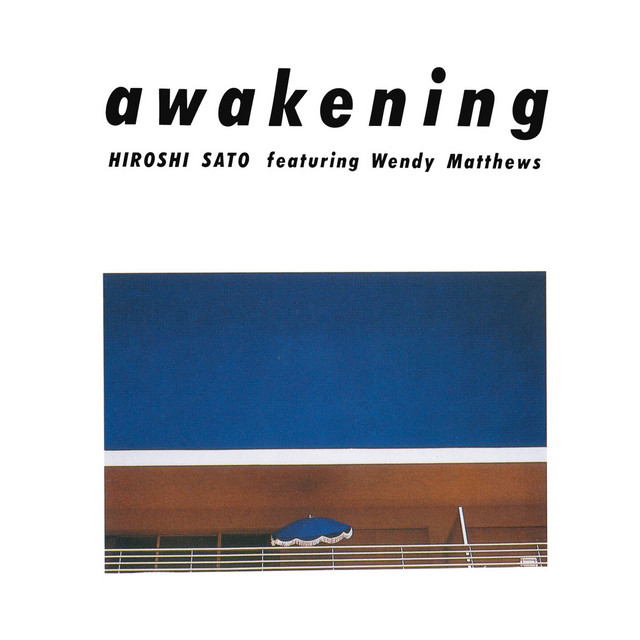
Awakening (1982) - Hiroshi Sato featuring Wendy Matthews

Hiroshi Sato was part of the City Pop scene since its inception, but I never see him attributed with the same prestige or influence as the likes of Tatsuro Yamashita or Toshiki Kadomatsu. That said, his landmark album, 1982's Awakening, is about as classic a City Pop record as one could imagine, but in a far quirkier, organic and individual way than what could be expected from most other artists. Vastly ahead of its time, this work is an unlikely product of Sato's yearning for something he felt Japan could no longer afford him and a magnetism that continually drew him back to his musical roots. To Sato, it really was an awakening, because it represented a renewal of possibility, and the resulting work is one of the finest examples of genre fusion to come out of Japan that decade.
Long-time readers of this blog (who?) will know the value I place on an album with a succinct flavour, whose songs exist as part of a self-contained ecosystem. Awakening is very much one of these albums, but in such an imaginative and unusual way that fuses ideologies and tech to create something quite unique. At one end of the spectrum, there exist within the record slow, after-midnight, smoky jazz-club ballads, full of soul and emotion, centred around the acoustic piano. At the other end, we have the hyper-futurism of the Roland Jupiter 8 and the Linn LM-1 drum machine (I know, I know) which feel to be at the very frontier of music production, sounding almost otherworldly, let alone innovative. Such a fusion shouldn't work, but it's to Sato's credit that he had such inspiration and vision with this record, that he seemed to just make them work. The blend is inexplicably effortless. Even that drum machine, when incorporated with flush production value, choice timbre and carefully monitored accompaniment, can be part of a truly stylish, palatable yet avant-garde soundscape.*

*I maintain that Prince had no place using it in Sign 'O' The Times, feeling more of a convenience in his case, whereas for Hiroshi Sato it feels integral to his overall concept.

  1. Say Goodbye
  2. Blue And Moody Music (Wendy's Version)
  3. Only A Love Affair
  4. Blue And Moody Music
  5. Awakening
  6. It Isn't Easy
  7. I Can't Wait
  8. Love And Peace
  9. You're My Baby
  10. From Me To You
    (Exempt from total score: Awakening (覚醒) )
Total Points: 30/50
Average Score: 6.0

Say Goodbye is about as close to a City Pop anthem as you can get, yet its sound actually encroaches more on the contemporary 'future-funk' offshoot from the last decade. Though the staple of funky guitar fills are prevalent, as well as Awakening's signature semi-automated arpeggiated motif, it's the introduction of Sato's robotic vocoder-processed voice and the wobbly low synths that project this song so far into the future. This combination makes for a distorted, submerged-under-water feel that evokes the kind of overproduction that has only really come about since City Pop was rediscovered in the internet age, messing with its bare bones and 'retrofuturising' the music within a new context. Here, the heavy affectation to the tones create a bubble around the relatively simple song, making it the most immersive moment on the record.

Collaborating with Australian singer Wendy Matthews for multiple vocal tracks was a key factor in the album's blanket mood of genre-mashed sophistication. Her clear, high voice performs a careful balancing act with Sato's deep, rich tone, and the whole album feels like the most grown-up of duets. Their two separate versions of Blue And Moody Music act as opposing ends of the electronic-acoustic spectrum - and though both are magnificent, the rendition with Wendy's vocals trumps it for me; the brighter, perkier sound bypasses the literal content of the lyrics and cuts straight to the feeling they're trying to convey. Her voice is an exquisite fit for another highlight, Only A Love Affair, in which she passionately but sagaciously confesses her irrepressible love for someone, as the coolest of electric pianos tinkles around her vocals. The song is restrained, chic and perhaps the most refined on the album, whilst still feeling very much part of the same world as the thick, competing layers of Say Goodbye.

Though it's true that I applaud how effectively Sato was able to marry acoustic jazz with pioneering electronica, I will say that every track errs one way more than the other, and it is unfortunately those jazzier influenced ballads that I feel are weaker. They are undoubtedly beautiful in their moodiness, but that moodiness is a double-edged sword; at worst, they're sluggish, dense and drowsy. It Isn't Easy, when isolated, manages to ride the soul to a greater degree of success than the rest, but is mildly hampered by its positioning directly after the equally-slowly-paced I Can't Wait. Furthermore, its aloofly virtuoso piano solo is offset by the overarching prevalence of a particularly lumpy pentatonic scale motif, feeling a little too remedial of a focus when in such a high class of music production.

While City Pop contemporary Tatsuro Yamashita (who, incidentally, plays guitar throughout Awakening) is obsessed with the Beach Boys, Hiroshi Sato always had something of a hyper-fixation with another western entity - The Beatles. Barely an album surfaced without a slightly awkward cover of one of their more overlooked songs, their original 60's sound rejected in favour of synthesisers and clunky 16-beat rhythms, attempting to update them for the 1980's. Sato always had great melodic and harmonic instincts, a vivid imagination and an excellent grasp of the English language; by this logic, these covers shouldn't be ill-advised disasters. Unfortunately though, these strengths are hard-countered by a frequent lack of restraint, a desire to constantly push the envelope, and a preoccupation with unnecessarily reworking old material (others' and his own alike). The results were often shambolic arrangements full of mad, goofy-sounding synth sounds, that stink of trying to fix something that isn't broken. From Me To You is no exception, sounding rather like a demo playing out of a Casio midi keyboard. Its slowed-down pace renders the music patchy and insubstantial, and the poor choice of song turns the sophisticated and modern vibe from the rest of the album utterly on its head, this track absolutely lacking synergy with the rest of the material.


The aforementioned envelope pushing is perhaps the reason why I don't harbour as much love for Sato's subsequent works, which are far more synth-heavy and clumsy, despite his ever-prevalent skilfulness as a programmer and producer. Awakening marks an interesting juncture in his career, freshly back from America (a point of significance for many City Pop artists), increasingly interested in where technology could take him and the boundaries it would broaden, but still wanting to scratch an itch that existed from a time where his music was more atmospheric and acoustic. It is this in-between-ness that perhaps makes this album such a standout, not just to myself but in the general view of City Pop connoisseurs. Marriage of cultures and genres has always been elemental to City Pop, but never has it been quite so exploratory and to such serendipitous effect. There is, quite simply, nothing else like it.

Thursday, 18 September 2025

Sign 'O' The Times (1987) - Prince

Strap in folks, this one is a long one. I have a lot to say.

I generally think of Sign 'O' The Times as one of my favourite albums. Pre-rating system, I would have pinned this as top 10, probably even top 5 material. But casting a critical eye over it and comparing it to a multitude of other records shines a light on the flaws that I've previously chosen to ignore. For better or for worse, I can't honestly say I enjoy this album as much as I thought I did. But that's not to say it's a bad album - it is undoubtedly Prince's magnum opus and will probably remain my highest rated of his works. But first, a little backstory on why I consider Prince one of my favourite artists of all time. I promise it is relevant - in fact, it is very much intertwined with my review of this album.


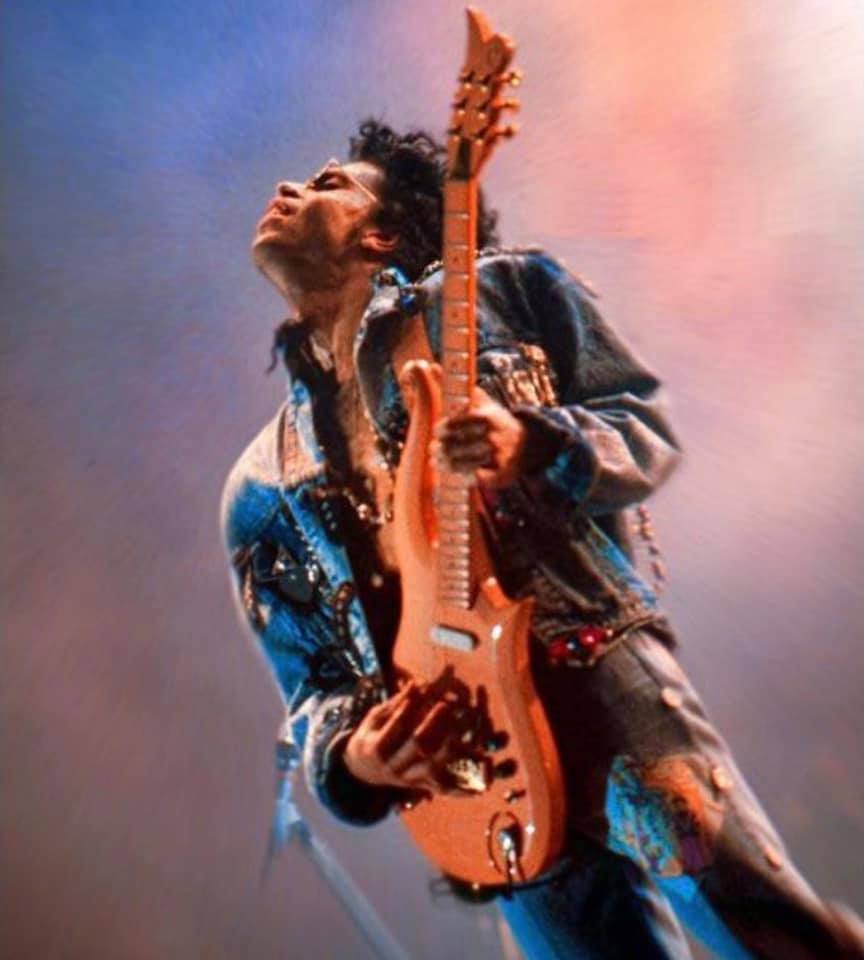
My introduction to Prince was through Sign 'O' The Times. Not the album I'm reviewing though - the concert film of the same name, featuring many of the album's songs performed, for want of a better word, live. Weaving a poorly-conceived and even-worse-acted narrative into the setlist, performed on a smoky, late-night city slum set, Prince somehow accomplished the impossible, using these corny and extremely dating elements to only amplify the quality of the music, to a point where the amateurish skit segues barely register as a drop in the ocean. And what music it was! It was my first exposure to music that defied the boundaries of genre, simultaneously moody and funky, distortion guitar and slap bass intertwined, that managed to fuse such contrasting elements as nihilistic philosophy and sleazy erotica. Why was there a scantily clad hyperactive drummer performing a 2 minute percussion solo like some sexy female Animal from the Muppets? Why was the saxophonist wearing a hooded cloak and clutching his tenor sax like he was the grim reaper brandishing a scythe? Why was there a giant heart-shaped platform that tilted gradually backwards from a vertical until it formed a horizontal trashy love-hotel bed? Turns out, ecstasy. But also, it was a vision, one that left me immersed and invested and in awe of what music could be. It was an awakening.

The fact of the matter is, if I was reviewing the songs as I heard them 'live', there would be a sea of blue ahead in my rankings, and you'd be looking at, indisputably, my favourite album of all time. But the 1987 double album Sign 'O' The Times is a different beast entirely, effectively an amalgamation of several years' worth of songs, all originally intended for a plethora of unrelated shelved projects, and thrown into an odd kind of compilation. One that has a theme, but lacks the clarity of a smaller concept album, or the full scope of of a grander and more extensive compendium.

The real disappointment, the thing that makes this album come across like seeing the real Wizard of Oz after the curtain of the concert film is pulled back, is the quality, or lack-thereof, of the songs themselves. They sound like demos. There's no better way to put it. They sound tinny, feeble, stark, bland and incomplete. It brings to mind a vision of Prince spending hours isolated in a tiny studio, like a self-imposed asylum, frantically trying to play every instrument in turn over the robotic monotony of the Linn drum machine (my true nemesis for this record), scrambling so hard to contain every idea that he ends up missing the vision he started with. Timbre, richness and balance remain largely unconsidered, to the point where it sounds like Prince forgot he could re-record something instead of force it into a box in which it doesn't belong. These tracks are mere shells of what they would later become, when granted the treatment of a live band, the input of other performers and the consideration to become something more than a slapdash effort at turning a creative mess into an actual release.

It is crazy to me that Prince could look over the eventual double album and think 'yes, this is ready for release'. It may have been the drugs, but I have a theory that he heard his production efforts entirely differently in the 80s, his ears filtering them before the information reached his brain, and making him think he'd produced something akin in sound to what his live concerts yielded, but on his own in a studio. Imagine an artist painting a landscape, and getting so close to the canvas and caught up in details that he forgets to stand back and neglects to see none of the colours match and there's no sky painted in. SOTT is that painting, but in music. And again, just a theory, but I reckon he was so untouchable to those around him, touted as such a genius, that no-one dared tell him that his music production was anything less than immaculate.

Whatever the reason, ranking these songs is hard. Harder than usual, when you're torn between judging what might have been, based on what they would become in a different setting, and what they are in situ. Do I purely evaluate the core skeleton of the song, the lyrics and tune and chords that remain unchanged? Or do I zoom in on the anaemic sound quality and overarching limpness that let the record down? Doing this would undoubtedly allow some fundamentally weaker tracks to rise up the ranks, just because they have a marginally more soulful delivery, compared to real gems that are coated in the grime of poor manifestation. Ultimately, I have had to take it all in, and go with my viscera - not my head or my heart, but what my gut tells me is right.
  1. U Got The Look
  2. If I Was Your Girlfriend
  3. I Could Never Take The Place Of Your Man
  4. Strange Relationship
  5. The Ballad Of Dorothy Parker
  6. Sign O The Times
  7. Housequake
  8. Forever In My Life
  9. Slow Love
  10. It's Gonna Be A Beautiful Night
  11. Play In The Sunshine
  12. Starfish And Coffee
  13. The Cross
  14. Hot Thing
  15. Adore
  16. It
Total Points: 50/80
Average Score: 6.25

Straight off the bat, its clear that what my gut tells me is that I Could Never Take The Place Of Your Man, the absolute standout from the concert film, though vastly diminished by basically being no better in quality that its original 1979 demo, ultimately maintains its prestige in my eyes, just by being a really good song. However, almost everything else remains a weak, pale husk of the sumptuous, decadent events they become in the film. Slow Love in particular is so transformed with Prince's hyper-sexualised performance and dizzying arrangement - especially Eric Leeds' dazzling sax cascades (saxcades?) - that it's only when you listen to the comparably banal studio recording that you realise how vanilla it is - structurally, lyrically and sonically, it is a rather empty affair.

Only two tracks are unmarred by a superior 'live' performance (yes, I'm aware I'm skirting around the legitimacy of the concert recordings, but I have far more pressing points to make first) - one of which breaks form and is actually the studio recording, with it's actual promotional music video slotted into the middle of the film. U Got The Look is the only track that retains the amplitude present in Purple Rain era of production (the last full Prince album of truly decent sound quality until the 90s) and its bombastic, plosive beats are much more evocative of what Sheila E did on tour than what the Linn drum machine usually recited. This vivacity sticks out like a sore thumb, thriving in a sea of songs that are, by comparison, on production life support. The other high-scorer, If I Was Ur Girlfriend, has the privilege of being distinct from its concert counterpart but not necessarily worse - what comes across as sterile production on other album tracks here serves as a beneficial degree of restraint. There's even a moment, at the climax at the song, where the drum machine is all that's playing, like it's been left on and Prince has just caught himself in the midst of delivering his 'psychosexual monologue' - and a truly apt feeling of unsettling introspection and isolation prevails.

Regrettably, most other tracks are simply tainted by the knowledge that they are so far from their full potential. Housequake, for example, is about as funky a jam as Prince can crank out. The studio version is serviceable (thanks to being one of the few tracks to feature collaborative musicians!) but it doesn't make me want to get up and dance and be alive. It leaves me feeling just fine sat here. Same for the title track - it's all the right notes in the right order, but does it have the soul to make me want to bang along with the 'drum' tattoo at the end? Absolutely not.

A couple of higher scorers are songs that don't have the same core issue the rest do, from not being featured in the setlist for the film. Strange Relationship has a thumping, driven beat and croaky, deep bassline that encroaches on the kind of oomph U Got The Look achieves, combining with a tidy, balanced verse melody for a real sense of resolution. And The Ballad Of Dorothy Parker, while still feeling quite bare, invokes a fittingly understated ambience and is, at least, a decently interesting story to listen to.

At the other end of the spectrum, Adore is utterly boring. Saccharine in all the wrong places, lazy in the lines that need the most attention, obtuse organ cheesing up the place, muted trumpet stabs turning it into a pompous jazz parody, and loose, howling vocals having little-to-no regard for the actual song being performed. The only thing that saves this slog of a closer from dead last place and even, miraculously, from a red rating, is the abomination that is the song It. Orchestra hits are an acquired taste at the best of times, but never have they been used so offensively - dare I say even recklessly, over the most repetitive and bitch-basic synth pattern that a preschooler could master and, you've guessed it, our old friend Linn. Prince sometimes prefers to screech out his vocals as opposed to sing them, and he picked the absolute worst track to use this technique to create discordant 'harmonies' over. This song is unlistenable. It's even a low point in the film, the lyrics inexplicably attached to the end of a lovely acoustic rendition of Forever In My Life and tripling the length of the song with no real pay-off - but at least they're sung and not screamed.


I have been so critical of this album that I doubt I've adequately conveyed my adoration and respect for it and what the songs represent to me. I certainly haven't accomplished this for my admiration of Prince himself. He just had the misfortune of unveiling himself to me for the first time in the most unfairly unattainable instance of perfection that anything else would be a downgrade by comparison. The bar was set way to high with the SOTT film and my brain made it a precedent that just couldn't be bettered. I do love this album, I promise. But it's so hard not to listen to each track and picture a better version, standing and waving to me just a short, out-of-earshot distance away. It is a travesty that the film never had an official audio release - imagine a remaster of that? I would eat that up. The closest things we have are the live recordings from Utrecht featured on the Super Deluxe SOTT remaster - bootlegs inform me that the band was pretty much on form for every live show, and this is no exception - but there are always, of course, minor differences. Thus is the nature of live music.

Which brings me to the elephant in the room (and a bit of an ironic full circle moment): it is glaringly suspicious that the 'live' recordings in the film are all magically played without Prince ever plugging in his guitar. To his merit, the perfectionist in him spoke out and told him to rerecord the video, knowing he could give more and do better. This allowed him to unplug and go for drama and showmanship, ham everything up and make the visuals match the fantasticality of the incredible music. So it's basically all lipsynced to the original audio. Again, thanks to bootlegs and the Utrecht recordings, I know he's playing the guitar in the original recordings - I do not question his bonafide virtuosity. But what I do question is why he had the compulsion to pursue a greater spectacle here, but not for the root studio album. Was it pressure from his label, with whom he had an infamously rocky relationship? Was it the ego of a renowned prodigy incapable of seeing the forest for the trees? Or was it simply the ecstasy?

Thursday, 3 November 2022

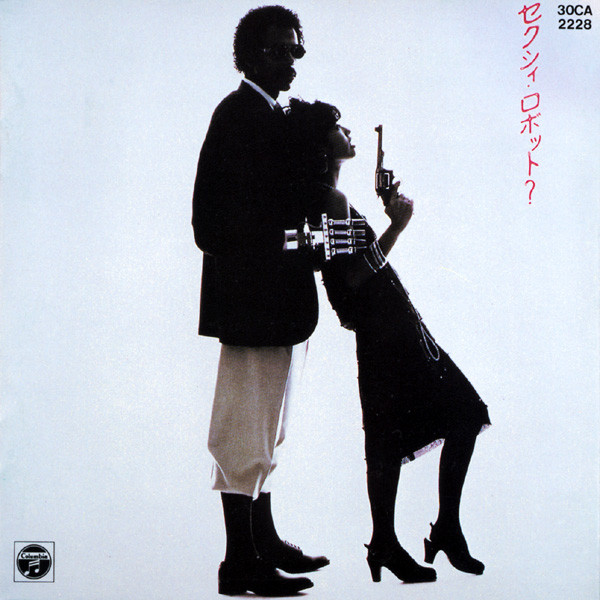
Sexy Robot (1983) - Hitomi 'Penny' Tohyama

Considering that one of my main goals with this blog was to find a way of integrating City Pop with my favourite western music, I think it's high time I looked at another record from that particular region and era. Sexy Robot by Hitomi 'Penny' Tohyama (who from now on, as her debut album implores, I'll just call 'Penny') is quite a different take on the broad and blurry-bordered umbrella term of City Pop when compared with the previously reviewed For You by Tatsuro Yamashita, but it is no less quintessential to the genre. It simply showcases another side of it - the roots and influences come from similar places, and ultimately both albums boil down to being outstanding products of the 1980's Japanese economic bubble. While busy exporting brands to the western world that we now consider household names, something of a cultural exchange was occurring without us ignorant westerners even noticing, with Japanese musicians borrowing from soul, disco, funk and pop, and infusing with it their own sensibilities and the latest technologies. The results were, as you may expect, both extremely varied and oftentimes very transparently referential. 


When you listen to certain (excuse the colloquialism, but I need to be frank) bangers from Sexy Robot, it's hard not to let a part of your mind guiltily think of the music as derivative. If you've ever lurked such dark and hostile corners of the internet as City Pop themed reddit pages, you'll have seen posts about how artists like Toshiki Kadomatsu have 'ripped off' forgotten 12" bass riffs from the 70's. You'll click on the link and listen, and think to yourself with immense reluctance, having thought your Japanese discovery was a work of original genius, "yeah, ok, that is almost identical actually". The most glaring parallel when it comes to Penny's music is Wanna Kiss, whose thudding bassline is the fraternal twin of Queen's Another One Bites The Dust. I didn't notice until I saw one of these obsequious posts pointing it out, the commenter almost salacious in trying to discredit Penny's song, and now the comparison has forever (admittedly, mildly) tainted Wanna Kiss in my mind as a known imitation, no matter how much I adore it and how much effort I can see has been put into making it unique and wonderful in its own right.

But here's the thing: who fucking cares? In addition to such melodramatic exposé-type posts on these often insufferable forums, largely kept aground by Gen Z-ers hiding behind excessive emojis and memes, you'll also find posts of 'new' music, praising acts like The Weekend for 'sampling' Tomoko Aran's Midnight Pretenders (sampling is an understatement, it's basically taking the track unaltered and singing over it) and 'bringing it to a new audience', as if the majority unfamiliar with Tomoko Aran's original track would even consider that he didn't come up with it himself. And you can guarantee they'll be the same people who prefer the 'slow and reverb' version of an Anri song, or gush about bootleggers like Macross 82-99's bare-minimum remixes of 80's tracks being passed off as their own work, without due credit to their original sources. In my opinion, these are far worse crimes than a bit of light musical imitation - these are bonafide regurgitations! City Pop exists because of its western influence. I'd much rather listen to something independently generated from Japan that sounds a lot like (for example) Kiss by Prince than something that literally steals and recycles and bastardises a heartfelt article of musicianship and turns it into a mangled effigy of something that was once pure. I have no problem with sampling, but when the line is crossed and these lazy 'mixes' are passed off as new creations by new artists, it boils my blood. Especially when the whole movement is carried by zoomer trolls with moral compasses so warped by modern concepts like cancel culture that they can't see any kind of evil or injustice that isn't based solely within political correctness.

Ok, rant over. Let's rank this shit!

  1. Wanna Kiss
  2. Let's Talk In Bed
  3. We Are In The Dark
  4. Tuxedo Connection
  5. Be Mine
  6. Sexy Robot
  7. Cathy
  8. Behind You
  9. Try To Say
  10. Slow Love
Total Points: 29/50
Average Score: 5.8

Before the advent of the compact disc, it wasn't uncommon for albums to be divided in theme by their sides of play. Overt examples are Kate Bush's Hounds Of Love or, to stay on theme, Mariya Takeuchi's Miss M. While not explicitly annotated as such, what would be 'side A' of Sexy Robot on vinyl or cassette is definitely the more upbeat, danceable half of a clear division, while the second half of the album is slower in pace and much more soulful. While both halves are smoothly but boldly rendered and certainly not disparate, the division itself between the two moods feels a little jarring. Also, the first part is just so much catchier and alive! Of course the slower, moodier side is going to waver somewhat after listening to the strutting, fun, outspoken flamboyance displayed across the first five tracks - there's no escaping this. And it's not a criticism as such, more just an observation, and something of a justification for why my ranking echoes the two halves of the record so closely, with just the middle-most two tracks saving the order from dividing the songs down the middle in the same two parts as the actual tracklist.

Putting any derivation aside, Wanna Kiss is still my top-rated track, and it's a blunt, booming spectacle of sophisticated, refined disco, brought up-to-date for the 80s, with a synth bass laying down the foundations for more experimental ancillary electronic fills. These sounds, by today's standards, are almost retro-futuristic, the wonky, artificial timbres verging on cute or humorous. But just before they reach the level of comical, they evoke the bygone era - that familiar safetynet of nostalgia for something you were never part of that City Pop manages to oh-so-often conjure - and you're transported to a time and a place where these quirks aren't quirks at all, but part of the biome of the music. Along with Wanna Kiss, the confident yet coquettish, partially rapped Let's Talk In Bed carries a kind of restrained sparseness in its musical arrangement, foreshadowing the conventions of modern-day r&b. Reinforcing their western inspiration, songs such as this one and Tuxedo Connection use English lyrics to punctuate the cosmopolitan soundscape with references to alcohol and sexual attraction, selling the record as a soundtrack to a hedonistic and aspirational lifestyle, exemplary of the aforementioned economic bubble long before it was due to burst.

Penny's voice matches the music well - there's something a little ham-fisted about the way she sings, exuberant and verging on brassy, but a gentler or more restrained singer would risk being overshadowed by all of the cutting-edge synths and such. By competing with the instrumentation a little, her voice's boldness wins out and actually reinforces the prevalent themes of confidence and frivolity, and her decisive, expressive phrasing 
makes sure the spotlight remains on her vocals. That said, she's never uncompromising to the point of being detrimental; when a mellower vocal is needed, such as for the silken and understated We Are In The Dark or one of the more heartfelt tracks in the second half, she is able to rein it in and channel her power into emotion. Penny's voice, to me, feels more typical of a musical theatre or cabaret singer than someone making pop records. But her personality and its placement within the bubble-era zeitgeist is what makes it work, and the result is an unorthodox but striking sound that really distinguishes her from her 1980's peers.

With all the fandango around electronics and drum machine, the music can, at stages, feel a little clumpy and overly automated. The title track suffers from this in particular; despite its distinctive hook and zealous vocal performance, the four bars of solo drum machine at the 2:13 mark do it zero favours, tipping the balance from state-of-the-art sophistication to sounding like it was homemade on a primitive home computer and saved onto a floppy disc. Luckily, the virtuoso guitar and key contributions throughout, from the likes of multiple other City Pop dignitaries such as Makoto Matsushita and Hiroyuki Nanba, bring the music back down to earth and, alongside Penny's singing, insert some much-needed corporeality into what could easily have been quite a robotic affair. Of all the album's offerings, I found Slow Love to be the weakest - assumedly some kind of relaxed, modern take on Motown, but bumbling and quite diluted, and not suited to Penny's ability to bring the levels of drama achieved in the comparably epic closer Be Mine, or any of the funky jams from the first half.
 

It can sometimes be difficult to know where to start with certain artists, especially when it comes to City Pop, with Penny herself having made too many albums to count on both hands, and a lot of her repertoire similar in flavour. Sexy Robot feels perhaps the most exemplary of her vivacious, flirty, courageous side, and is definitely the harder hitting sibling of her other 1983 release Next Door, which touches on these strengths but pulls several of its punches and feels a little 'naff' at times. This overarching cheapness is something that does unfortunately find its way into other examples of Penny's work, but is largely avoided when she opts for a more acoustic accompaniment (see Just Call Me Penny and Five Pennys). However, with these albums, her unique brand of charismatic, girly confidence is lacking, and the themes of luxury and pleasure-seeking take a backseat. Only with Sexy Robot are all of Penny's biggest strengths able to be experienced without compromise, making it the perfect entry level album to help decide what in her discography to explore next.

I know I spent a little longer on this review than others (not least because I got sidetracked by my resentment of modern appropriation of my favourite musical genre) but hopefully it has been informative and beguiling and not just fanatic rambling. I think it's pretty obvious from the length and depth I went into, as well as the sheer quantity of hyperlinks to discogs pages, that this is something of an area of passion for me. If it inspires anyone to listen to some City Pop, for the first time or the umpteenth, or even just piques your interest or sets off a spark somewhere in your brain, then I am happy.

Friday, 29 October 2021

For You (1982) - Tatsuro Yamashita

I could sit here for hours and reel off essays attempting to describe the type of music that westerners refer to as 'City Pop' and would still not be able to settle on a definition that satisfies everyone. Such a definition doesn't exist. City Pop is such an abstract concept, that pulls from so many different tropes and traits of bonafide genres (not to mention real-world social, political and historical context) that it is impossible to transpose into words. It is a blanket term, that spans so much yet seems to apply to so little, and I don't want to spend half a review trying to pinpoint its essence. Tatsuro Yamashita is often cited online as the 'King of City Pop' -  and just to point out how infuriatingly nebulous this label is, Tatsuro himself only became aware of its coinage in the late 2010s, several decades after his heyday as a recording artist. For now, all I want to do is establish that his 1982 album For You is a quintessential example of City Pop, whatever the hell that is.


As much as I find it impossible to define the genre, it isn't so difficult to point out the factors that contribute to this album's status as a City Pop classic. We'll start with the bold, stylised cover art, depicting Tatsuro standing next to a commercial white building in what is clearly a sunny part of America (idyllic Californian scenes and The Beach Boys being notable influences on his work), overlaid with Memphis-esque confetti squiggles, a design quirk firmly embedded in the 80s. The music is everything you'd expect it to be looking at this artwork - carefree and understated, yet precisely arranged with immaculate production; not a single note has been neglected or merely 'settled for'. For an early 80s record, the sound comes across as remarkably fresh by today's standards, which is a testament to the crystal-clear precision and polish that was somehow achieved without an over-reliance on synths or drum machines. No outdated or gimmicky electronics antiquate the sound, Korg keyboards are used only sparingly, and are so subtle you barely notice them.

His signature blend of sumptuously layered vocal harmonies, funky rhythm guitar passages and pithy slap bass is at its most finessed, this record showcasing just how breathable and digestible such complex structures can be. With his trademark sound applied to thematically simple songs about everyday life and love, the result is an undeniable slice of Tatsuro-flavoured City Pop, that makes for breezy, uncomplicated listening with a feel-good energy.

Let's see how I've rated each track:
  1. Love Talkin' (Honey It's You)
  2. Sparkle
  3. Music Book
  4. Loveland, Island
  5. Your Eyes
  6. Morning Glory
  7. Futari
  8. Hey Reporter!
    (Exempt from total score: Interludes A&B, Parts I&II)
Total Points: 26/40
Average Score: 6.5

For You kicks off with the textural delight that is Sparkle, full of bright and gorgeously balanced instrumentation. Like many of the tracks, there is nothing cloudy or contorted about the layers - every individual part can be picked out easily and appreciated on its own merit. Music Book follows, with a light, ambling tempo and a sunny and fancy-free vibe evocative of a summer drive in an open-top car; this kind of leisurely vision is something I can't help but picture when listening to the record, especially if I'm on the road. The apogee of the album is undoubtedly Love Talkin' (Honey It's You), which is so transparently straightforward and unabashedly sweet that its six minutes drift by like a funk-fuelled daydream. Thrice in the song does Tatsuro croon the somewhat sappy lyric 'honey, I love you' over the constant, strolling beat, and with each occurrence the length of time he holds the word 'love' is doubled; small touches like this demonstrate just how carefully built his music is.

At worst, the songs could come off as saccharine - the closing track Your Eyes being particularly at risk with its sugary English lyrics and chords sustained with gradients of melodrama - but luckily the album's overall sophistication manages to diminish this outlook. Lowlights would have to include Futari, which is harmless enough but a little dragging in its repetition near the end, and Hey Reporter!, which essentially feels like an imposter. Clunkier in tone, with jaunty, nonchalant vocals and far more abrasive timbres, there's nothing wrong with it as such - it just doesn't fit. A far better substitute would be the elegant and heady single release あまく危険な香り(usually translated as Dangerous Scent), which is thankfully available on modern remasters as a bonus track.


Calling For You innocuous could be seen as a rather backhanded take, but this comes from a belief that the album could slide quite affably into the soundtrack of anyone's midsummer drive or social barbecue without causing a stir. If heard on the radio, I doubt the songs would prompt anyone to change channel - one might even end up whistling along or listening out for the name of the artist. It's innocuous, but not to its own detriment - anyone who is drawn to take a closer look into those beautifully crafted layers will be able to discover the brilliance hidden in plain sight. Next time you've got a commute in hot weather, wind down your window, pop this on your stereo and let the music brighten up your day just that little bit more.