Showing posts with label Electronic. Show all posts

Thursday, 18 December 2025

Awakening (1982) - Hiroshi Sato featuring Wendy Matthews

Hiroshi Sato was part of the City Pop scene since its inception, but I never see him attributed with the same prestige or influence as the likes of Tatsuro Yamashita or Toshiki Kadomatsu. That said, his landmark album, 1982's Awakening, is about as classic a City Pop record as one could imagine, but in a far quirkier, organic and individual way than what could be expected from most other artists. Vastly ahead of its time, this work is an unlikely product of Sato's yearning for something he felt Japan could no longer afford him and a magnetism that continually drew him back to his musical roots. To Sato, it really was an awakening, because it represented a renewal of possibility, and the resulting work is one of the finest examples of genre fusion to come out of Japan that decade.
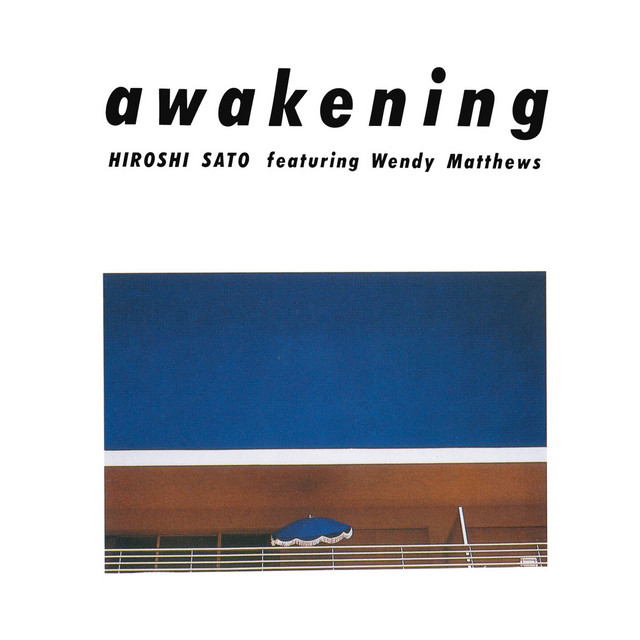
Long-time readers of this blog (who?) will know the value I place on an album with a succinct flavour, whose songs exist as part of a self-contained ecosystem. Awakening is very much one of these albums, but in such an imaginative and unusual way that fuses ideologies and tech to create something quite unique. At one end of the spectrum, there exist within the record slow, after-midnight, smoky jazz-club ballads, full of soul and emotion, centred around the acoustic piano. At the other end, we have the hyper-futurism of the Roland Jupiter 8 and the Linn LM-1 drum machine (I know, I know) which feel to be at the very frontier of music production, sounding almost otherworldly, let alone innovative. Such a fusion shouldn't work, but it's to Sato's credit that he had such inspiration and vision with this record, that he seemed to just make them work. The blend is inexplicably effortless. Even that drum machine, when incorporated with flush production value, choice timbre and carefully monitored accompaniment, can be part of a truly stylish, palatable yet avant-garde soundscape.*

*I maintain that Prince had no place using it in Sign 'O' The Times, feeling more of a convenience in his case, whereas for Hiroshi Sato it feels integral to his overall concept.

  1. Say Goodbye
  2. Blue And Moody Music (Wendy's Version)
  3. Only A Love Affair
  4. Blue And Moody Music
  5. Awakening
  6. It Isn't Easy
  7. I Can't Wait
  8. Love And Peace
  9. You're My Baby
  10. From Me To You
    (Exempt from total score: Awakening (覚醒) )
Total Points: 30/50
Average Score: 6.0

Say Goodbye is about as close to a City Pop anthem as you can get, yet its sound actually encroaches more on the contemporary 'future-funk' offshoot from the last decade. Though the staple of funky guitar fills are prevalent, as well as Awakening's signature semi-automated arpeggiated motif, it's the introduction of Sato's robotic vocoder-processed voice and the wobbly low synths that project this song so far into the future. This combination makes for a distorted, submerged-under-water feel that evokes the kind of overproduction that has only really come about since City Pop was rediscovered in the internet age, messing with its bare bones and 'retrofuturising' the music within a new context. Here, the heavy affectation to the tones create a bubble around the relatively simple song, making it the most immersive moment on the record.

Collaborating with Australian singer Wendy Matthews for multiple vocal tracks was a key factor in the album's blanket mood of genre-mashed sophistication. Her clear, high voice performs a careful balancing act with Sato's deep, rich tone, and the whole album feels like the most grown-up of duets. Their two separate versions of Blue And Moody Music act as opposing ends of the electronic-acoustic spectrum - and though both are magnificent, the rendition with Wendy's vocals trumps it for me; the brighter, perkier sound bypasses the literal content of the lyrics and cuts straight to the feeling they're trying to convey. Her voice is an exquisite fit for another highlight, Only A Love Affair, in which she passionately but sagaciously confesses her irrepressible love for someone, as the coolest of electric pianos tinkles around her vocals. The song is restrained, chic and perhaps the most refined on the album, whilst still feeling very much part of the same world as the thick, competing layers of Say Goodbye.

Though it's true that I applaud how effectively Sato was able to marry acoustic jazz with pioneering electronica, I will say that every track errs one way more than the other, and it is unfortunately those jazzier influenced ballads that I feel are weaker. They are undoubtedly beautiful in their moodiness, but that moodiness is a double-edged sword; at worst, they're sluggish, dense and drowsy. It Isn't Easy, when isolated, manages to ride the soul to a greater degree of success than the rest, but is mildly hampered by its positioning directly after the equally-slowly-paced I Can't Wait. Furthermore, its aloofly virtuoso piano solo is offset by the overarching prevalence of a particularly lumpy pentatonic scale motif, feeling a little too remedial of a focus when in such a high class of music production.

While City Pop contemporary Tatsuro Yamashita (who, incidentally, plays guitar throughout Awakening) is obsessed with the Beach Boys, Hiroshi Sato always had something of a hyper-fixation with another western entity - The Beatles. Barely an album surfaced without a slightly awkward cover of one of their more overlooked songs, their original 60's sound rejected in favour of synthesisers and clunky 16-beat rhythms, attempting to update them for the 1980's. Sato always had great melodic and harmonic instincts, a vivid imagination and an excellent grasp of the English language; by this logic, these covers shouldn't be ill-advised disasters. Unfortunately though, these strengths are hard-countered by a frequent lack of restraint, a desire to constantly push the envelope, and a preoccupation with unnecessarily reworking old material (others' and his own alike). The results were often shambolic arrangements full of mad, goofy-sounding synth sounds, that stink of trying to fix something that isn't broken. From Me To You is no exception, sounding rather like a demo playing out of a Casio midi keyboard. Its slowed-down pace renders the music patchy and insubstantial, and the poor choice of song turns the sophisticated and modern vibe from the rest of the album utterly on its head, this track absolutely lacking synergy with the rest of the material.


The aforementioned envelope pushing is perhaps the reason why I don't harbour as much love for Sato's subsequent works, which are far more synth-heavy and clumsy, despite his ever-prevalent skilfulness as a programmer and producer. Awakening marks an interesting juncture in his career, freshly back from America (a point of significance for many City Pop artists), increasingly interested in where technology could take him and the boundaries it would broaden, but still wanting to scratch an itch that existed from a time where his music was more atmospheric and acoustic. It is this in-between-ness that perhaps makes this album such a standout, not just to myself but in the general view of City Pop connoisseurs. Marriage of cultures and genres has always been elemental to City Pop, but never has it been quite so exploratory and to such serendipitous effect. There is, quite simply, nothing else like it.

Sunday, 2 November 2025

West End Girl (2025) - Lily Allen

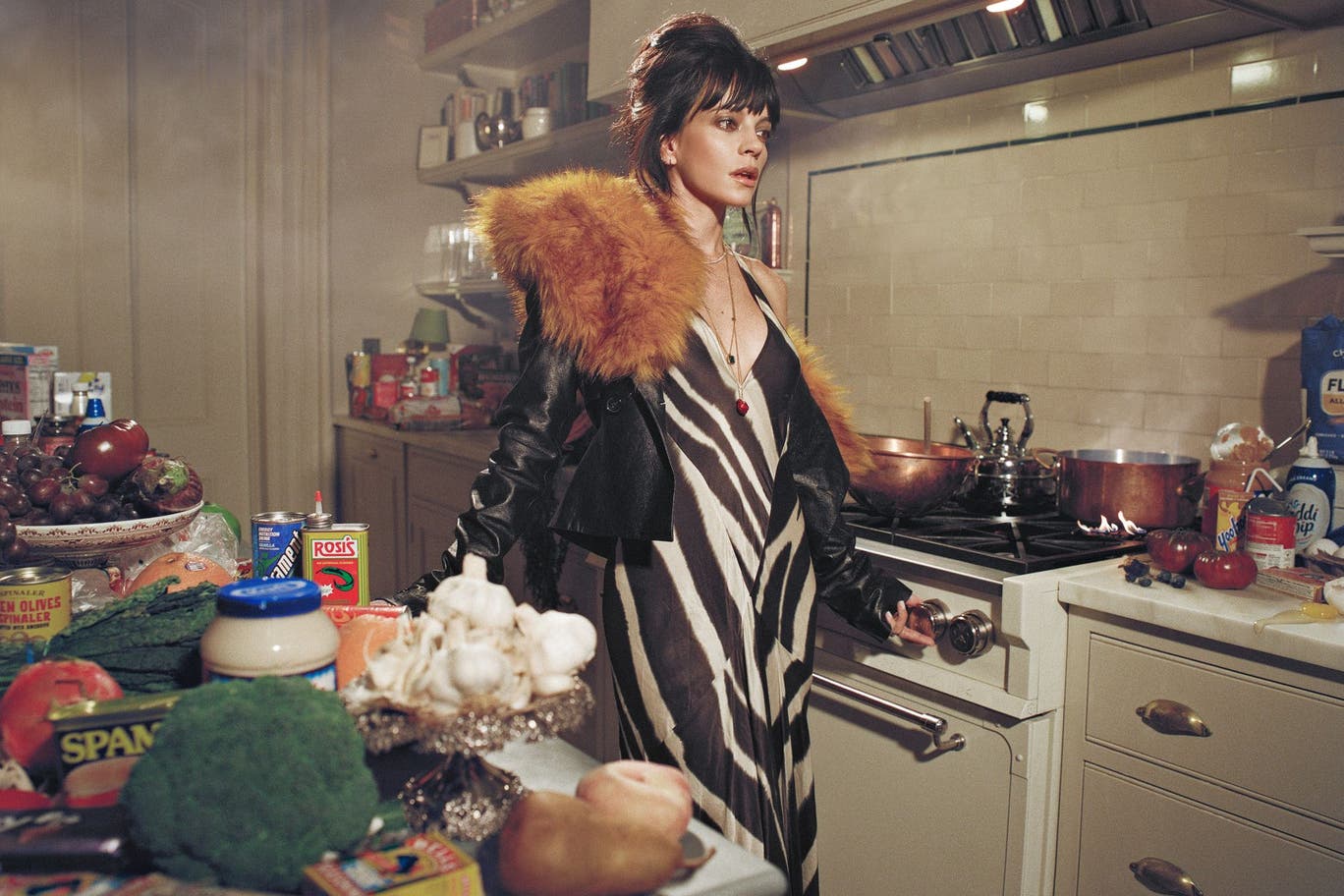
Less than a month after my spontaneous Sheezus review, Lily Allen comes off musical hiatus and drops (I hate that term but it really did just 'drop') fresh new album West End Girl. And it's not just any album, but a break-up album (the juiciest kind) - and you just know, with it being Lily Allen, she's not going to hold back. To paraphrase a friend of mine, this girl wrote a song called Fuck You; she was not about to pull any punches. But what proceeded when I pressed play was a much more delicate exploration into her divorce from David Harbour than I had expected, one full of speculations, dwellings on small moments, and frank but understated revelations. It still has it's cutting moments, and definitely draws from a familiar well of honesty and openness, but what really comes across is how thrown off Allen is by the whole experience, and the uncertainty and fragility that ensues.

When I think of great break-up albums, the one that stands out to me is Björk's Vulnicura - a highly meditative and organic excavation into the breakdown of her own marriage, spanning the full breadth of the emotional spectrum from tenderness to despair. While West End Girl certainly exudes similar range, and is arguably every bit as dextrous in expressing specific, subtly divergent micro-feelings (although with less inner confidence it seems), it is actually Björk's fourth album, Vespertine, that I can draw the most comparison with*. This is due to the shared utilisation of small-scale electronic beats and intricate mixing to create a quietly complex yet unostentatious sound, and an overarching lyrical theme of family and everyday home-life that Björk has previously labelled 'domestic'. In West End Girl, Allen is constantly referencing her kids and struggling to work out how to filter her marital situation for them, and which of her family unit is currently at or away from home - it doesn't get any more domestic than this. The household setting becomes the headspace for the dilemmas and musings at the root of her anguish, serving to further amplify her pain because of how trapped within these boundaries the lyrics are. Even in tracks like Dallas Major, where she's clearly trying to move past them, she's ultimately subdued by those oppressive walls and incapable of escaping.

*I still plan to review both Vulnicura and Vespertine at a later date. Indeed, one of my objectives in starting this blog was to finally settle my preference between Vespertine and Homogenic. Spoiler: initial rankings of Vespertine don't exactly make this conclusive.

  1. Sleepwalking
  2. Madeline
  3. Pussy Palace
  4. Dallas Major
  5. 4chan Stan
  6. Fruityloop
  7. Just Enough
  8. Ruminating
  9. Tennis
  10. Relapse
  11. Nonmonogamummy
  12. Let You W/In
  13. West End Girl
  14. Beg For Me
Total Points: 45/70
Average Score: 6.43

Even though I've messed around with the exact placements of these songs incessantly, I always end up with a similar balance of colour distribution and a score with only one point or so difference. This tells me that the strength of this record is in the way the tracks come together to paint the overall pastiche, and not necessarily within the individual tracks. The lack of blue corroborates this - there is no standout, and I think this is largely owing to the small-scale, domiciliary approach that Allen has taken in portraying her divorce. There is very little in the way of sensationalism within the lyrics, and the sound suits this decision. Separately, the songs only say a fragment at a time, but those individual components come together to make, to reference Björk one more time, an army of Lily, that presents a unified front and wins you over in numbers.

The album's overall sound is so chilled out that if you took the vocals away, it would sound like a lo-fi playlist presented in high fidelity. When you listen with headphones, the soundscape is cocooning and comforting, with ambient beats, swelling, woozy-sounding synthesiser fills and the softest of pizzicato strings building up a safe environment for Allen's vulnerable storytelling. Pussy Palace and Relapse epitomise this vibe, the latter reminding me of some of the softer moments I gave a somewhat harsher critique to in Sheezus but, here, succeeding due to the immersive nature of the record. Occasionally, a more acoustic approach is taken; Just Enough is especially delicate thanks to this, while the chord sequence and fingertipped guitar in Let You W/In evoke the theme from Brokeback Mountain, the connection inherently carrying with it a similar degree of emotional weight and an air of reluctant resolve.

Sentimentality aside, the album has its venomous moments too. The bluntest lyric on the record, 'lie to me babe and I'll end you', punctuated with the cocking and subsequent firing of a shotgun, also happens to be my personal favourite. This is taken from Madeline, the song where we see the Lily Allen from MySpace, at her gutsiest and coldest, adopting an active role rather than a reactive, passive one. So many of her lyrics are about working out her feelings and recounting conversations, the kind of introspection that is inevitable in the throes of a break-up, but here she's pursuing, acting on her intuition and sparking a streak of revolt in a sea of contemplation. By the time we get to the final track, Fruityloop, Allen has come to terms with her disillusionment, and a full circle moment occurs when she finally has the revelation that 'it's not me, it's you', to quote the title of her second studio album.

After much debate, I settled on placing the title track and Beg For Me at the bottom. Though the song West End Girl contains the crucial, tangibly awkward and damning 'phone call' where the realisation sets in for both Allen and the listener, the song until that point is admittedly a bit plain and one-dimensional. Beg For Me is one of the severer sounding tracks, the pizzicato coming across much more hostile alongside the frosty sampling of Lumidee's Never Leave You - this track would certainly be a missing puzzle piece if it were absent, but its less exploratory and anecdotal format gives it more of a cookie-cutter materialisation compared to the rest of the album. The most difficult song to score was Ruminating, which could be placed first just as easily as last, depending on what aspect of the song most compels me at the time. As it goes, I've averaged it out at dead centre, weighing its whirlwind stream-of-consciousness highs against its generic, bludgeoned-over-the-head-with-autotune lows. It is an aural assault, but in the best way possible, considering that it possesses pretty much every trait I despise in modern pop music.


I've written all that and I've still hardly touched on several of the most memorable and profound instances, of which there are several many across the record. Lily Allen has done a superb job at hitting everything an artist can hit with a work about a break-up. Condense the story of an entire multiple-year-long experience down into a collection of 14 songs? Check. Remain cerebral enough to catch every emotions in the moment even while in the midst of turbulence and numbness? Check. Harness those emotions to create a concise but poignant body of directly conveyed and digestible content? Check.

All that, and to top it off, the music is banging. It's addictive to listen to. I don't really care too much about her personal life, but I'm somewhat invested in Lily Allen as a musician, and West End Girl feels like the apex of her artistic potential. I feel like I'm riding a zeitgeist, but not the one that's trying to sensationalise the scandal of her divorce (they can try, but the closest they'll get is quoting Tennis when she asks 'and who the fuck is Madeline?', and that doesn't really cut it). No, I'm riding my own personal Lily Allen zeitgeist right now, the one that is gushing over her growth, her ability to process and make art, and her authenticity throughout. And it's assembly is 10% my coincidental foray into a previous work of hers, and 90% this album's showcasing of her talent. I can't see there being another album this year that I end up liking more.

Sunday, 28 September 2025

Sheezus (2014) - Lily Allen

Sometimes I get so bogged down with nostalgia and trying to weave together some kind of grandiose review to end all reviews that it all starts to feel a bit stale. The albums I want to discuss are usually steeped in meaning for me, or have had verdicts on them marinating and maturing for several years (or even decades). I'm also aware that I'll generally have more to say about something I like, and that there's little point in reviewing an album I don't much like, given the whole point of this blog is to compare my favourite albums. This is a deadly combination that leads to insane writers block and, if dwelled upon too much, a sour taste for the music itself. So I thought I'd keep things fresh and review an album I've never listened to until two days ago.

I was a MySpace teenager (like you can't tell from the customised transparent banner I made for this blog) so I'd first heard of Lily Allen when she was on the brink of her breakthrough. Initially defined by a bold personal style (cocktail dress and trainers) and a quirky, vintage, ska-infused sound, Lily Allen was one of the biggest success stories of the indie music zeitgeist of the 00s. It soon became clear though that she wasn't the sort to sit primly in the niche she'd carved out for herself with her debut Alright, Still, and by the time Sheezus came around, Lily Allen had thoroughly made sure that her signature was her attitude, not her aesthetic.

Sheezus is essentially an electropop album - emphasis on the pop, with the electro seeping through in a largely subliminal way. You don't really notice how deeply you've been swimming in the electronic beats until URL Badman's dubstep chorus kicks in and tells you it's time for air. Typically the only electro not to manifest with overbearingly incessant energy is the kind of ambient, über-chill trip-hop of Massive Attack and the like. Sheezus, however, uses beats in a subtle, supportive way that maintains a calmness that isn't intrinsically atmospheric, instead finessing the music round the edges and helping to add flair to otherwise simple melodies. Together with Allen's clean, blasé style of vocalisation and quippy, unexpected rhymes, the result is a surprisingly sophisticated modern feminist manifesto of a nearly 30-year-old Lily Allen speaking her mind once more.
  1. Hard Out Here
  2. Insincerly Yours
  3. Air Balloon
  4. Close Your Eyes
  5. As Long As I Got You
  6. Somewhere Only We Know
  7. Our Time
  8. URL Badman
  9. Sheezus
  10. Silver Spoon
  11. L8 CMMR
  12. Take My Place
  13. Life For Me
    (Exempt from total score: Interlude)
Total Points: 38/65
Average Score: 5.85

Lily Allen is never short of statements to make, but the real headliners are the ones that pack the most punch outside of just their lyrical content. This makes Hard Out Here the clear standout, a bold pop banger with social commentary that still feels current and relevant, Allen's sweet, crooning vocals licensing her to be extra cutting in her critique. Insincerely Yours is similarly audacious, but laid back and funky, less of an outright anthem but just as memorable. This is where the electronic timbres work best, elevating a pretty standard tune to match the excellent lyrics by beautifully balancing layers of intricate effects and precision beats. Close Your Eyes functions as an updated take on the 90s r'n'b slow jam, like TLC's Red Light Special, but white, British and post-childbirth - a little more self-deprecating and dysfunctional, but every bit as transparent and lustful, and polished with the same pristine sleekness that exemplifies the best of the album's tracks.

There are two main ways that the album wanes for me; one is in the clumpier overproduction suffered in songs like L8 CMMR and Sheezus - these songs rely a little too heavily on discombobulating effects and an almost satirical use of autotune and synth sounds that come across like intentionally sarcastic musical tropes. If they were positioned later in the tracklist, they'd take me right out of the listening experience. Speaking of which, the anomalously jolly and acoustic As Long As I Got You absolutely does this, smack bang in the middle of the album. The song itself is innocuous but its presence detracts from the album's otherwise synergistic mood.

The other way the album wanes is through an inherent sleepiness that dusts the slower, less vibrant songs, an issue that I also observed in 2009's It's Not Me, It's You. Allen's voice does not fluctuate in tone track to track, always set to a deadpan, lightly sassy medium-low. So when a lower energy song comes along, she's not working overtime to sell it, instead depending on the construction and content to do the work. Take My Place and Life For Me, though palpably heartfelt and personal to Allen, lack the necessary interest to keep them from being unfortunately boring, electronic embellishments unable to help out when the material is so languid to begin with. You can't aim for beauty in simplicity when Hard Out Here is right there on the same record.


Though not everything on the album is to my taste, I appreciate when an artist can really let me into their world and see things from their eyes, and that is what Lily Allen does best. She does it so directly it almost feels cheap - in fact, it does feel cheap in the songs with a less bombastic sound. But in the rest, master directional decisions and clarity of vision elevate Allen's opinions and observations into a true art, something that is as catchy and poppy as it is succinct and important. I don't think diving into music I've never heard before will always work for me - I think there was an element of luck this time round. I'm not always going to be able to just pick up an album and expect to have things to say about it. But I feel refreshed for having done it this time, so I'd say the experiment was a success.

Tuesday, 26 October 2021

Homogenic (1997) - Björk

When it comes to albums, my fascination goes a little bit deeper than the kind of instinctual musical predilection present in us all. Instilled in me since uni is the specialness of bringing together a collection of singulars in an act of curation, to tell a story, to get the right balance and through line, to create an entity that is more than just a list of works reeled off in an unspecified and inconsequential order. This is why, whenever I make a playlist, I've been known to spend weeks or even months engineering the perfect flow through selection and order, because it makes all the difference when played from start to finish.

This is something I treasure within albums. Nothing makes me happier in music than when it's clear that an album was fully conceptualised, and in fruition is restrained, fluid and of one singular flavour. The latter in particular - instrumentation, mood and style that fits together that feels as one - is, for me, the crux of an exemplary album, This might sound something of a moot point to the average rock fan or classical enthusiast, where the consistent set of equipment and sole production team being used to create the music dictates a kind of uniform from the offset. But in electronic albums (and more widely, pop), this is not a given. It's a choice. And one that Björk took to heart on the creation of her third* studio album.

*fourth if you count her 1977 eponymous Iceland-exclusive childhood record, which I do not


Homogenic was thusly named due to Björk's desire to create an album with 'a simple sound' and 'only one flavour'. Her prior albums, Debut and Post, are far more eclectic, presenting like musical tapas, with Björk picking and choosing, going back and forth between a scattering of unique influences, from state-of-the-art electronica to traditional acoustic instrumentation. These efforts were examples of a musician who was having fun in finding herself as a solo artist, and relishing in the areas that gave her joy. Homogenic though, instantly feels more grown-up, more stable and more special, and I believe this is entirely down to the strictness with which the concept of uniform flavour was adhered to. Everything, from the 'volcanic', piston-like beats to the soaring string arrangements, comes together in unity, presenting a strong but dynamic (remarkably never monotonous or boring) cast that allows the individual tracks to shine within a perfectly bespoke framework. Even the artistic direction emphasises this unity, the steely exterior casing opening up to reveal rich, cyber-organic innards, presenting the whole package as a protective bubble, housing a kind of self-sustaining ecosystem of music.

While I admire this overarching trait, it is equally important to consider the individual tracks - after all, this is the foundation upon which my system is based. I'll keep this in the sidebar for future reference but, as this is the first implementation of it, I'll place it here too:

Blue (5pts) - God tier
Green (4pts) - Excellent and memorable
Amber (3pts) - Perfectly serviceable
Orange (2pts) - Inoffensive filler
Red (1pt) - Unlistenable, best skipped
Uncoloured (0pts) - Exempt/Ineligible for rating (e.g. interludes & hidden tracks)

Now for the tough part. Be kind, internet:

  1. Jóga
  2. Alarm Call
  3. Hunter
  4. 5 Years
  5. Bachelorette
  6. Unravel
  7. Immature
  8. All Neon Like
  9. All Is Full Of Love
  10. Pluto
Total Points: 30/50
Average Score: 6.0

For an album that, just a few seconds ago, I praised to high heaven for representing something of a gold standard for me, 6 might look a rather low mark out of a possible maximum of 10. Firstly, I need to make the point that in order for an album to boast a perfect score, every single track needs to be 'God tier', and this is pretty much an impossibility. In fact, I have a feeling that more than a single blue track on any given album is going to be noteworthy. Think of them as my version of Michelin stars. So, in effect, two blue tracks is quite something for me. Jóga is an obvious choice for this accolade - powerful lyrics and timbres amalgamate, majestically evoking the landscapes of Björk's native Iceland. Alarm Call, however, isn't one of her more iconic tracks - not nearly as iconic as the extremely low rated All Is Full Of Love - which brings me onto my next point...

In any project that is, to such incredible effect, a fully-realised and 'one flavour' article, there are going to be difficult choices about what makes the final cut. In a case like this, omissions are as important as inclusions, and when faced with multiple versions of songs, choosing one over another can be a crucial decision. The penultimate track, Pluto, is a hard listen, with its dark, industrial beats and filtered vocals, and while it still manages to feel like part of the ecosystem, it is extremely stark and abrasive when you've listened to 8 comparatively congenial tracks before it. All Is Full Of Love follows, and producer Howie B's version was probably selected to emphasise the feeling of a 'fresh start' after Pluto's themes of destruction. Lacking the signature beat style present elsewhere, this version instead is full of unbearably shrill torrents of what sounds like a flock of electronic birds flying overhead, and a bassline that is most accurately likened to the sound you experience when your ears are too full of wax and you can hear your pulse in them. Björk's sublime, raw and mighty vocals are the sole saving grace, and the only reason I've not rated it dead last.

The fact that there exists a far superior, more magical, more palatable version, which would have absolutely integrated with the album's soundscape, makes the chosen mix something of a tragedy in my eyes. However, herein exists a classic case of swings and roundabouts - my other album highlight, the bouncing and bombastic Alarm Call, could not be described as such in its incarnation as a single. Inexplicably sped up, amped down and bounce well and truly stunted, the single version's production does nothing to reinforce the lyrics which express a desire to 'go to a mountain top, with a radio and good batteries, and play a joyous tune'. I feel a bullet was dodged that this mix was not included in the album, and it is a true shame that the version I love so much was shunned in favour of such a flaccid replacement for individual release and could not be known to a wider audience.

In typical Björk style, Homogenic boasts an incredible breadth of emotional and musical range - the introspective contemplation and ambient piano phrases of Immature at one end, the ambitious scale and grandiosity of Bachelorette and Jóga at the other. The latter are collaborations with Icelandic poet Sjón, who Björk worked with to come up with 'epic' lyrics, and whose poetic virtuosity has been periodically employed in her songwriting over the years. It is a testament to the album's atmospheric continuity that such diverse songs can resonate in conjunction without conflict. As well as the strong-handed creative direction, it is Björk's confidence and conviction that really enables this synergy between the tracks.

Homogenic is a shining, critically acclaimed album, which is never too far away from your average music zine's GOAT lists, and is a timeless and enduring staple of many a music collection. Hopefully I have conveyed my agreement with this consensus, despite my gripes with some of the later tracks. To many, it is Björk's magnum opus, and I certainly can't argue that the record adeptly encapsulates the qualities she is best celebrated for - her childlike charm is as prevalent as her emotional awareness, the interpretation of her messages is meticulous and her voice is at its most expressive. For a first review, I must admit that it's rather a superfluous one, because you don't need a review to understand that this album is a masterpiece. I knew that the first time I listened. But perhaps, through my garbled and scantily-informed analysis, you'll give it a spin and see it in a way you might not have thought of before.