
It feels crazy to think it today, but Sunshower by Taeko Onuki was not a commercial success upon its initial release in 1977. Disliked by her record company and underperforming in sales compared to her 1976 debut, Sunshower sounds like it was the black sheep of Onuki's discography until the western world was introduced to City Pop in the late 2010s. The very definition of a sleeper hit, it gradually gained more traction with the genre's exposure to a new audience. Now, several rereleases later, it is considered a landmark City Pop record, a true melding of some of Japan's greatest musical minds and a must-have in any enthusiast's library.
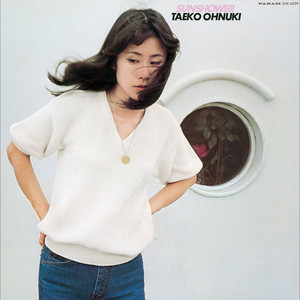
Instantly recognisable to many as 'the one with the girl in front of the washing machine' on the cover (even though it's actually just a round window), Sunshower is one of the most 'alive' records I can think of. There's a real sense of 'everythingness' to it, and despite being a 'crossover' work of both eastern and western influence, this immersion in the thick of life and ability to break it apart and observe its fragments feels like a succinctly Japanese sensibility. To me, it's akin to the work of photographer Rinko Kawauchi, whose beautifully captured snapshots of often unremarkable moments speak of minute details and the rush of life all at once, and purvey both a corporeal matter-of-factness and a kind of ethereal magic within them. That is how listening to Sunshower makes me feel. I've talked previously about the time-travelling capabilities of City Pop, but with no other record can I mentally place myself so palpably within an album's specific universe.
- Summer Connection
- Tokai
- Dare No Tame Ni
- Karappo No Iso
- Furiko No Yagi
- Nani Mo Iranai
- Silent Screamer
- Law Of Nature
- Kusuri O Takasan
- Sargasso Sea
Average Score: 6.4
The album kicks off with Summer Connection, the opening bars of which are a cockerel's crow to wake the listener up to an idyllic song full of breezy momentum and cheery string flourishes. Onuki's nonchalant and unadorned vocal style is at its most carefree and innocent when accompanied by the track's perky yet chilled out instrumentation. After this tremendous opener, a tonal shift occurs, and we start to see how Sunshower is a tour of emotions and moods that echoes the various facets of not only a hazy summer's day, but of Onuki's curiously diverse range. Delicate moments such as Dare No Tame Ni and Karappo No Isu act as serene, private contemplations in the cool of the shade, the latter of which drifts and drops into the ears with almost accidental-sounding phrasing akin to Fleetwood Mac's Albatross. In another moment, Tokai brings us back into the sunlight and the buzz of a city, of people bustling and numerous intertwining happenings, further exemplified in the busy but untangled layers of instrumentation, from waspy synths to bouncy bass guitar.
Above all, Onuki's voice resonates with simplicity above the music, whether it be the babbling crowd of a full orchestral arrangement or a stripped back jazz band set-up. Even with the legendary Ryuchi Sakamoto's input thoroughly detectable throughout the album's DNA, the record comes across as distinctly personal to Onuki, and without a shred of an English lyric present for me to understand. Onuki has an ability to project her sole presence with her voice, in a remarkably isolated way, even while a host of Japan's most renowned and talented musicians relish in their combined virtuosity beside her. Their instruments become the drifting thoughts behind Onuki's vocalised observations, the songs her own private and intimately shared meditations, regardless of the harmonious collaborative effort involved in their making.
In terms of expression and adjustment of mood, the tracks I've not rated so highly manage everything my best scorers do. On a structural level, I find Law of Nature and Kurusi O Takasan less interesting, a bit stagnant with their arrangement. While their flutes and rattling rhythm sections do wonders for conveying a kind of inquisitive scrutiny of, respectively, a societal desire for naturalness or over-prescription of medication, they're simply not as pleasing as Karappo No Isu's moody sunset saxophone or the brilliant burgeoning drums during Furiko No Yagi's climax. Onuki's vocals are no less perceptibly melancholy or resolute in Sargasso Sea than in any other track; it is just a harder listen. Bare in rhythm and experimental in timbre and arrangement, you can't 'kick back' to this one like you can with the rest of the album - it exists to make you feel, but in stark and still way, removed from syncopation, electric piano flares or bold, brass section stabs.
Before concluding, I feel it would be negligent not to mention a couple of songs that would be further highlights if not for their status as bonus content on various rereleases of the album: the light and sanguine Heya, an aestival b-side to the single release of Summer Connection, and Kōryō, a fragile and despairing duet with Masataka Matsutoya created for his 1977 debut album 夜の旅人 = Endless Flight. These songs act as additional isolated moments in our summer daydream, effortlessly complementing the album's overall ambience in a way that makes me lament that they are not integral to its original lineup.
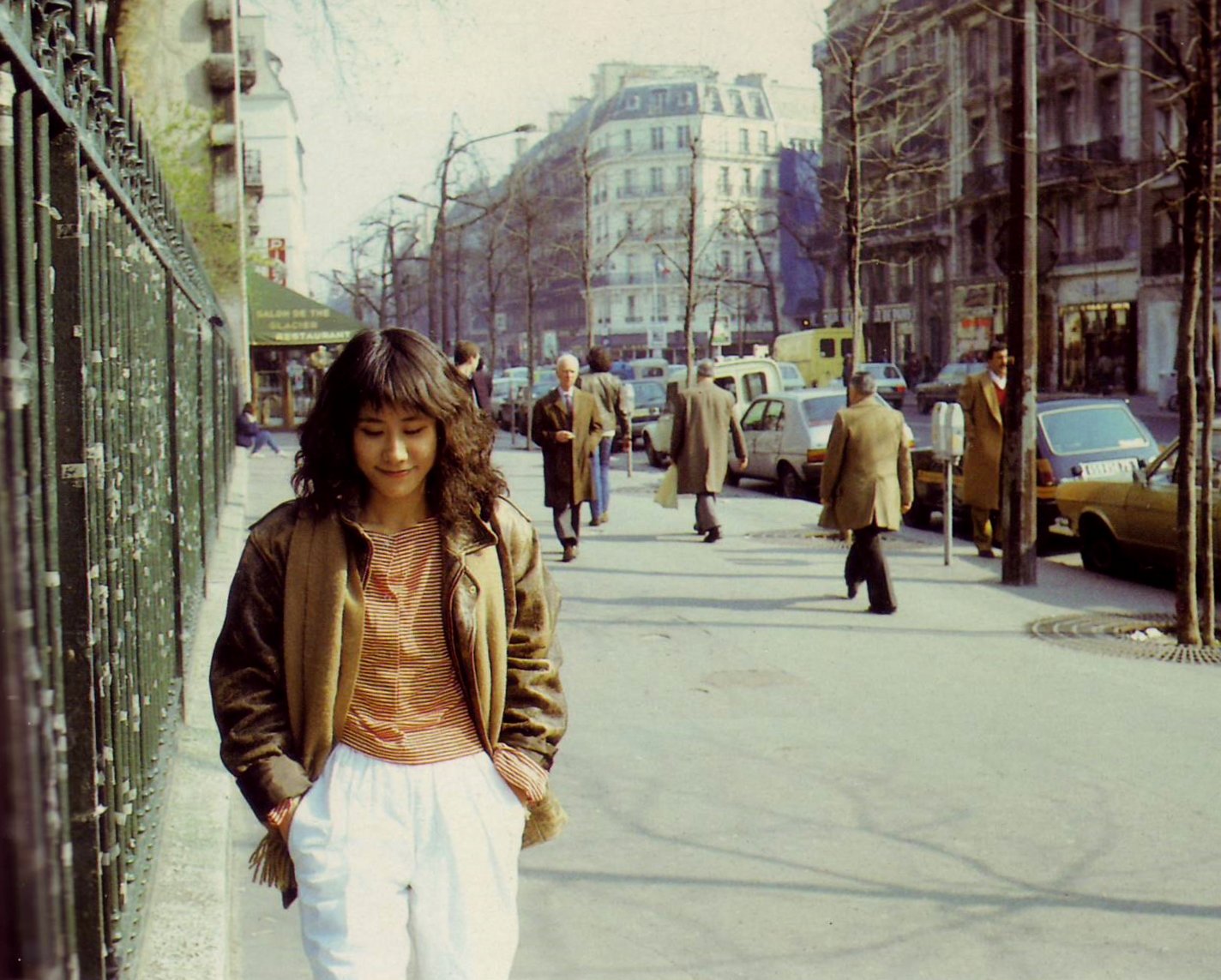
Sunshower feels like City Pop at its most raw, far removed from the flashiness of mid-80's, bang-in-the-middle of the economic bubble City Pop that is often at the forefront of the genre. It is every bit as polished, but clearly part of an earlier generation, much more organic and undiscerning in approach - still very much a meshing of eastern and western elements, but expressed in way that feels so void of thought, simply and purely as if straight from the soul to the ear. Like Kawauchi's photography, it speaks of life in an all-encompassing fashion because it is so direct and unfussy, unglazed with contrived staging or special lighting. I love letting this album wash over me, barely perceiving it in a conscious way, simply absorbing its ebbs and flows and allowing my mind to wander without rein. It has grown on me more and more because with each listen I bathe in its atmosphere and gain more from simply relaxing into it than I do from intentionally picking apart it's nuances. As much as I felt it necessary to review, that's not what Sunshower is for; listen to it with your body and your soul, not your mind, and you'll be able soak up all of its glorious light just as I have done.


