Showing posts with label Rock. Show all posts

Friday, 26 December 2025

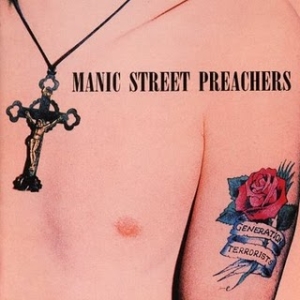
Generation Terrorists (1992) - Manic Street Preachers

I usually try to write my reviews in a way that 'comes full circle' or reinforces my main observations/talking points, so that they feel as complete as I can make them. During the course of writing this one though, I realised that each of those points were merely a station on a rather linear route - all needed, all wanted, but without an all-encompassing message I'm trying to convey. And the culmination is ultimately an ode to perhaps the greatest song of the 1990s, rather than a reflection of the whole album. So - spoiler alert - this one is going to end with a weird science-project-esque points summary as a kind of round-up, but no actual general conclusion. No problem there, but maybe not what you'd usually expect from me in terms of structure. In terms of polarising opinions and florid language, however, I shouldn't expect to disappoint.


Whereas in the past, I've praised double albums/records with a high volume of content for managing to not to feel bloated, I cannot offer the same assessment for Generation Terrorists, the debut effort of the Manic Street Preachers. This album stinks of an overwrought need to cram songs into what was essentially a musical and political manifesto for the band, in a record where a song omission is effectively a censorship of stance. With a high media profile and long wait in the run-up to its much anticipated release, the band was set up for disappointment from the start. Thematically, the album is generally favoured, and the totality with which the Manics saturate its sound and lyrics with their message is undeniable. But the general consensus is that, despite the commendation, there's just too bloody much of it. And I'm inclined to agree.
  1. Motorcycle Emptiness
  2. Little Baby Nothing
  3. Slash 'n' Burn
  4. Nat West-Barclays-Midlands-Lloyds
  5. You Love Us
  6. Condemned To Rock 'n' Roll
  7. Tennessee
  8. Another Invented Disease
  9. Crucifix Kiss
  10. So Dead
  11. Methadone Pretty
  12. Spectators Of Suicide
  13. Love's Sweet Exile
  14. Stay Beautiful
  15. Born To End
  16. Damn Dog
  17. Repeat (UK)
  18. Repeat (Stars & Stripes)
Total Points: 49/90
Average Score: 5.44

A gargantuan eighteen individual songs, almost filling the entire 80 minute capacity of a compact disc, is an ambitious feat for your album debut, and something that hindsight would probably correct if it could. With retrospect comes a refined vision and a more discerning approach, and this was acknowledged by then rhythm guitarist and lyricist Richey Edwards, claiming it would be 'a lot better without the crap'. Daunting to tackle as a listener, the album largely matches expectation upon seeing the tracklist, as a dense and distended ordeal to trudge through. The fact that there are two versions of the same song (incidentally my least favourite song on the record) featured as part of official (non-bonus) album infrastructure indicates just how unnecessarily overpopulated the record is. That said, quality hardly comes into it - in fact, I found many of the tracks nearly impossible to distinguish in this respect (note the vast sea of middling yellow in my rankings). The real problem with Generation Terrorists is that, in sound at least, it's largely the same, more of the same, and then just a little bit more of the same. 

And then, there's Motorcycle Emptiness.

I've written previously about a standout single leaving the rest of the record in the dust, in reference to Cake by Trashcan Sinatras. To say this here would be a slight discredit to the overall quality achieved across Generation Terrorists, and the moderate strength of other reasonably memorable tracks like Slash'n'Burn and Condemned To Rock 'n' Roll. However, I cannot stress enough how fucking good this song is. In a sea of squiggly glam rock refrains and semi-screamed hair metal vocals set over cowbells and run-of-the-mill punk palm-muting, this is an absolute outlier. It doesn't compare - never mind the ballpark, it's a whole other game. It sounds nothing like anything else on the record, to the point where I'm thinking "is this even the same band?". Motorcycle Emptiness is a song that only should have surfaced with 2 or 3 albums under their belt, with the maturity and perspective that usually only comes with time and experimentation. Not on a debut, and not on a debut full to the brim with another very consistent flavour of music.

The instant the twisting, soaring notes of the guitar melody kick in, you're in a different world. The sparser drums and syncopated guitar strumming are so much more relaxed and effortless that it feels almost like autopilot; let the song do the work and the performance will take care of itself. No-one is trying too hard or in a hurry here - with the change of pace, you're given permission to close your eyes and absorb and enjoy as the 6 minutes of perfection drift into your ears. It feels like a dream - time transcends, and you're almost floating as the wondrous momentum propels itself, feeling at once wistful and voracious. Lyrically is the only way it ties into the rest of Generation Terrorists, with aptly critical themes of nihilism within capitalism; musically, however, it is untouchable. There's nothing wrong with the rest, style-wise. It's fine. It feels very within a mould, which is ironic for what is essentially a punk record. This is just a different kettle of fish, and it's for sure the kettle I want my fish from.

I can't really justify making time for most of the album. Little Baby Nothing deserves its flowers, and their cover of the M*A*S*H theme that features later as a bonus track is harrowingly heartfelt if repetitive, but Damn Dog, for example, can get in the bin. I'm not going to waste my time re-listening to or discussing the lowest tracks - why would I, when I could be listening to Motorcycle Emptiness instead? Sorry for being so dismissive, but that's just the power that Motorcycle Emptiness has over me. It is, and I don't use this word lightly, epic.


So, in summary:
  • Generation Terrorists is too long and bloated, but not necessarily bad.
  • The material is competently played but largely indistinctive.
  • Motorcycle Emptiness exists on a higher plain.
Come their next album (which I won't detail here, it may deserve its own dedicated post in the future), many of the 'issues' are fixed - the vision is much more focused and the execution far more easily digestible. But there'll never be another Motorcycle Emptiness which, quite frankly, marks the zenith of my interest in the Manics. Early demos reveal how it's an odd, ramshackle collage of other, far more punky cuts, and I find it utterly fascinating that such a young band were able to mould it into a masterpiece that sits so far apart from the rest of their repertoire. My overall score is not particularly favourable, but let it be known that it's far more a product of quantity over quality, and that the most quality article of all exists there within.

Tuesday, 25 November 2025

Short Stories (Remastered for 2022) - Yeah Jazz

In previous reviews, I've gone into a fair amount of detail about where my various tastes stem from. Nostalgia is a huge factor when it comes to informing my musical profile, but it's also a driver that makes me want to continue writing about music. I've explored numerous different eye-opening (or, rather, ear-opening) points throughout my life in the form of musical anecdotes, but I think it's time to go back to where it truly all began. Which is, technically, in 1991, the year of my birth.
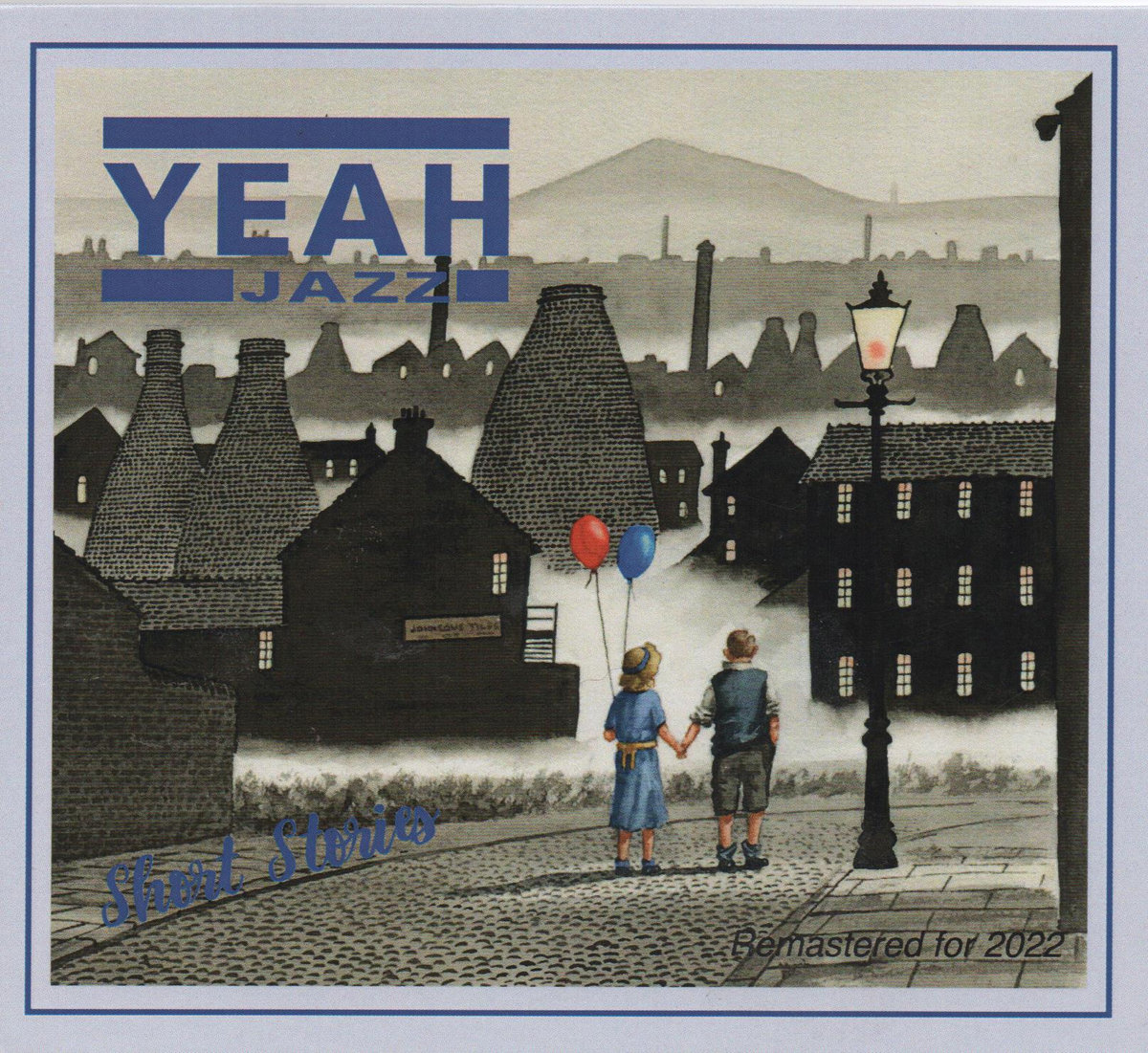


In 1991, Yeah Jazz (a relatively obscure band from Uttoxeter, Staffordshire) released Short Stories on cassette. After a few singles and an album in the 80s, this was their first release with new drummer Fred Hopwood, and the addition of a keyboardist, Dave Blant. To those in the know (not a single person reading this), everything is falling into place as to why I'm so intrinsically connected to this album in particular. But for those who don't know, maybe when I tell you that I am the nephew of Fred Hopwood and that Dave Blant taught me music from years 5-8 at Oldfields Middle School in Uttoxeter, where I grew up, you'll understand why these rudimentary facts about a little known indie band are actually relevant to me.

Some of my earliest memories of music are the songs from this album, playing on tape through the car stereo as we drive to a holiday rental in Wales, or blasting out of my dad's sound system on New Years Eve, or even a few nights before, heard live but not really consciously knowing it, as my uncle played with Yeah Jazz and his other various musical outfits at a local village club in celebration of his late December birthday. As my tastes evolved, I started to brush them off as 'just a local band', shunning their lack of clout and embarrassed by my ties to them, but over time I've reconnected. At uni, where I studied photography, they were a big influence for my final project (in which I created work about the tension I feel regarding my hometown), and I was able to draw upon the lyrics with a newfound insight and appreciation. Now, at the age of 34, I can see eye-to-eye with their vision and I feel like this music is in my blood.

A scan of the sleeve for the original 1991 cassette release of Short Stories

So if my intent is to review my first exposure to music, why am I working with the 2022 rerelease and not the original? Well, multiple reasons - strap in! (Or, alternatively, skip to the rankings if you don't give a shit.)

As well as these two 'editions' of Short Stories, there have also been 3 further releases (Songs from Biscuit Town, Distant Trains and a further Short Stories, the latter released by a German label under the alias 'Big Red Kite'), with almost every song appearing at least twice between the 5 total records, but in some cases 4 separate times. Perhaps the purest way to do this would be to review separately the Big Red Kite version and Songs from Biscuit Town, which feature only a single song in common (which, ironically, shows up nowhere else!) - but it was important to me to include all the songs that I have the most nostalgia for in one go. Separate reviews would mean segregating two absolute standouts on Biscuit Town from the rest of the pack on Big Red Kite. This would feel very wrong because I know them together from the original tape (see above). Now, speaking of tapes...

Distant Trains is an interesting one because it never had a release other than on cassette, and it's almost like a revised/abridged version of the 1991 Short Stories tape. The liners, much like the original Short Stories, were printed on assorted coloured cardboard in black toner (the roads in the above scan have been inked in with coloured marker afterward - music doesn't get more artisanal than that!). Eight of the ten tracks on Distant Trains are taken directly from the original 1991 Short Stories, but with two notable additions; Don't Let Me Leave and the title track. These are songs I'm reluctant to bar from my review; because of how much shared content there exists between the two tapes, I think of them as virtually the same album. Ultimately though, I struggle to want to review either of the two original cassettes, because they are the least accessible. Nostalgia or not, I can't currently listen to them in this format.

So this brings me to the 2022 Short Stories remaster. The highest quality audio, most accessible (it's on their band camp, along with Songs From Biscuit Town) and the most comprehensive tracklist. Almost every song is represented from the original two cassettes I knew as a child. Two exceptions are Speak To Me and Times Change (now only on the new edition of Songs From Biscuit Town) - these I can admittedly sacrifice as I'd basically forgotten about them, thanks to relying on CD rips and the original CD tracklist for Songs From Biscuit Town not featuring either (sidenote: this is so convoluted, it's probably not worth the three paragraphs' worth explanation). The final omission is Lorraine and Duane, which is a bit of a blow due to its uniqueness and exceptionally balanced structure, but not worth losing out on Distant Trains and Don't Let Me Leave for. Lorraine and Duane also features (consistently!) on Songs From Biscuit Town. The final consideration I had to make is that the rerelease inexplicably uses shorter edits of two songs (April and Hey Tray) - but I'm happy to take these as their original length counterparts.

My choice of edition effectively makes this something of a compilation review - but at this point, the lines are so blurred that a) it doesn't matter and b) I'm past caring.
  1. Billy Comes Of Age
  2. Orchids Bloom
  3. Thinking About You (aka Don't Stop)
  4. Hey Tray
  5. Distant Trains
  6. Don't Let Me Leave
  7. April (We've Changed)
  8. Rainbows
  9. Speak Softly To Me
  10. Brown Eyes
  11. The Great Escape
  12. Red Hot Polka (aka Lost At Sea)
  13. Angel
  14. Michael Forgive Me
  15. Cathy Smiles (aka A Summer's Day)
Total Points: 51/75
Average Score: 6.8

I'm not normally that responsive to lyrics, but I believe that Kevin Hand is unparalleled when it comes to storytelling - there's a reason it's called Short Stories. He has an ability with his ballads to go beyond simple narration; though the action and detail are definitely there, he's able to conjure such tangible atmosphere and utterly transport you to his headspace and his location, that his songwriting becomes straight-up poetry. And all with such unbelievable brevity. How does such a complete scene exist in my head when so few words are uttered? While it's true that I identify with much of his writing through living my own version of many of his experiences, there's also a lot I don't directly relate to. But through his colloquial yet carefully crafted lines, I really feel like I'm peering through his eyes and understanding his thoughts. Take the second verse of Hey Tray for example:

"Saturday, stuck in the launderette
Not noticing the notices she smoked another cigarette
And that photograph of you by the purple garage door
That coat you found - you'd strut around - do you wear it anymore?
And you know what? It's a funny thing 
The older I get, the less I feel I'm living"

This is actually pretty jam-packed for a Yeah Jazz verse, but it's extremely immersive. Hand frequently manages something I always aspired to do within my photography, which is to make a moment out of nothing. And it's scattered all over this collection of songs. Everything from describing "eyes as blue as blue skies" in Distant Trains, the "smoke from the chimney reaching for the sun" in Billy Comes Of Age, to the goosebumps I get listening to Thinking About You, where "we hit the road at 90 and the sun rose all around me". These lines, alone, have an understated beauty to them; I'm there, I can see it. But drop them into the full context of the music and you hit gold. You truly feel it.

Now, I don't think Yeah Jazz are especially talented instrumentalists, and this is evident in their solos. With the exception of my uncle's drumming, which is exemplary (I'm not being nepotistic I swear!), any facade of virtuosity is undermined by clumsy and unambitious ad libs. Blant's accordion solos are often clearly fumbled, lacking the dexterity and confidence needed to make a competent polka riff, and the constant prattling around the root note of the chord in guitar and keys solos alike feels amateurish and uninspired. But as an ensemble band, to create a mood and absolutely support each lyric with the ideal accompanying sound? It's this synergy that tells you they are a live band before they are recording artists. This is where they excel and actually surpass their individual skill levels.

So with this in mind, let's go back to that lyric from Thinking About You. "We hit the road at 90" is sung to what I would describe as a runaway drum rhythm, the brightest, slightly sharply-tuned piano chiming in the background, and a guttural, Johnny Cash-esque guitar playing the exact three notes to make the whole sky appear to swirl around you as you hurtle down the motorway and the sun hits from what feels like every direction at once. The song is tinted with the warmest of orange hues, and you're almost physically shielding your eyes as golden rays seep in through every window. This is the very definition of atmospheric.

My absolute favourite song is Billy Comes Of Age. This is a damn-near perfect song. Again, extremely simple in overall structure, but the story is told in so many more ways than just the already poignant, empathetic and naively articulate lyrics. The song builds from a lone, low piano, pausing for breath at intermittent junctures, tom tom rolls that remind me of Joy Division's Atmosphere, and a doubling of pace that feels perfectly timed to propel the story and step into Billy's shoes. The music builds with the story, and eventually reaches an apex of absolute liberation. There's a two-second pause, and then it kicks back in, ever so slightly (1bpm perhaps) faster, and you can feel the excitement and freedom filling your body. It is sublime.

My single critique of Billy Comes Of Age (which, in all other regards, is a quintessential coming-of-age song on par with Trashcan Sinatras' Obscurity Knocks, which is of similar vintage) is Kevin Hand's vocal style. Initially, when Yeah Jazz started up in the early 80s, they had a very blanket, undefined sound that blended them in with a million other white male British indie setups doing essentially the same thing. As he established more of an identity in his writing, he did the same with his voice. On the plus, he was able to curate a very distinctive style that exaggerates his midlands intonation and brings an undeniable degree of authenticity to his performance. On the downside, however, he bleats. He literally bleats like a sheep. He ruins the most beautiful lines by trailing off his notes in a stammered, downward glissando, which sounds so affected and performative that it can take you right out of the ambience they've worked so hard to establish. In a song as strong as Billy Comes Of Age, this vocal idiosyncrasy does the least damage - but as soon as you notice it once, you hear it crop up all over the album, and it's like pulling the one thread that could threaten to unravel the entire outfit.

But even with these shortcomings, the songs, generally speaking, work. Order has never really mattered to me - perhaps this is more due to how many configurations I've known them in over the years, or perhaps this is more due to their nature, each one very much being a 'short story' that the album title implies. Orchids Bloom is the most solid individual track, very well balanced and performed, with a brilliant chorus that works as much as a pop record as it does a mainstay in their unique soundscape. April encroaches on this as well, but with a bit more of a swerve into the polka/bluegrass lean much of the music has. The Great Escape and Brown Eyes epitomise this facet of their music, and while this influence can be polarising, I don't think it sounds weird among their less genre-specific work. Don't Let Me Leave contains an ample dose of this influence, and is one of the songs I most identify with as someone who once left that same hometown in search of freedom and a life beyond its confines.

I have the least amount of nostalgia for the newer additions, Michael Forgive Me and Angel, neither of which existed on the cassettes I knew as a child. The former, in particular, I don't especially enjoy thanks to the rolling and slightly limp repetitive guitar strumming and rhyming pattern that verges on twee. The one track I've thrown off the cliff though is Cathy Smiles, which was a favourite of mine as a kid. I used to love its lively, catchy accordion refrain, but now I view it as corny with positivity, and definitely the weakest of bunch lyrically. My dad always liked to pick apart the line "the grass grew around she smiled as she sat down on it" but for me, nothing is more of a cringe than life being "just a bus ride away".
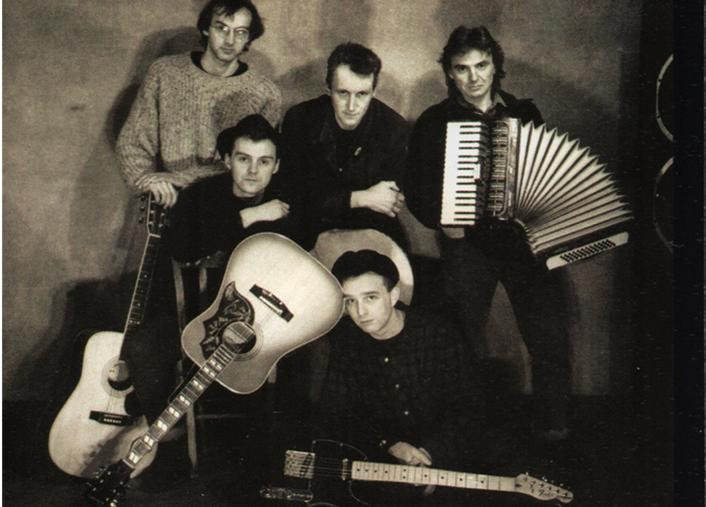

I knew I had a lot of feelings about this album but I didn't know until this review just how much I had to verbalise. I've been extra-critical in parts, but I think these assessments have ultimately been outweighed by the undeniable appreciation for the many, multiple aspects I love. Rather than summarising at this point to the extent I usually would, I'm going to do the unheard of and just straight up plug the band. They found a degree of commercial success in the 80s but this album and everything since have clearly been made to satisfy the creative buzz and for the love of performing, and if there is a reader viewing this who actually goes out of their way to give them a listen and find out for themselves what I'm on about, that will be worth a hundred times more than any review I could give.

So here's their bandcamp, go listen and purchase some music. And don't worry, it's not and has never been actual jazz.

Thursday, 2 October 2025

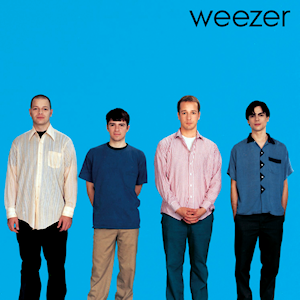
Weezer (Blue Album) (1994) - Weezer

When it comes to Weezer, a band whose work I've consistently kept up with throughout the years, and whose work I have a pretty comprehensive knowledge of, I think the best place to start is the beginning.

I didn't exactly grow up with Weezer - I was only 3 when their debut self-titled album (I'll refer to it as the Blue Album, or just Blue, as is permissible given that they are currently up to 6 eponymous works) was released, and I didn't really start listening to them until college, at which point I torrented their discography up to that date and really got into them. Since then, I've stayed pretty tuned in to what they're up to, and each new release plots a new co-ordinate on an ever-elongating graph documenting how good Weezer currently are. But in the eyes of so many, 'how good Weezer are' seems to correlate directly to their first record, and the real measurement actually becomes 'how closely a Weezer release resembles the sound of the Blue Album'.

When a band sets such a golden standard with their debut, it is very difficult not to compare everything with this solid initial idea of who they are. Anything too different feels like a deviation rather than an evolution, and it's to the credit of Rivers Cuomo that he rarely lets this stigmatic public viewpoint dictate direction of the band's output. I think I've trained myself over the years to not look at their new music in such an expectant, comparative way. That said, there have certainly been times when I'm midway through something simultaneously wacky and drab on an album like Pacific Daydream and I find myself longing for the good old Weezer of 1994. But what is it that gives Blue this iconic status that has endured for over 30 years and still remains the primary accolade of an act who have never stopped writing new material?

This era of Weezer was a simpler, less pretentious time, and the songs from The Blue Album (and, incidentally, follow-up Pinkerton) are the creations of a younger band, with different ideologies and priorities. Where with age, time and experience, a musician might strive for technical perfection, a younger musician whose ambition is no less potent will value different qualities. With a song like Say It Ain't So, rawness of emotion is the point, the take that makes the album probably used because the vocals sound authentically emotive and the verse contrasts especially well against the chorus. The Weezer of today don't make this kind of track - asides from the fact they don't need to, because it already exists in Say It Ain't So, raw emotion is just not high up on their agenda any more. I actually regard it a good thing that the band doesn't sound like they did in 1994 - that would be disastrously stagnant, and I would be concerned for Rivers Cuomo if he was as volatile and emotional at 55 as he was at 24.

So, in my opinion, it is the voice of a younger band who are taking the first possible chance to say the things they want to say that separates Weezer's early works apart from the rest. I think many find this easier to connect with, many can identify with their oddness and the honesty they are intent on conveying, and I think the delivery, unkempt but not messy, provides an accessible vessel in which to house these attributes.
  1. Buddy Holly
  2. Say It Ain't So
  3. Undone - The Sweater Song
  4. Only In Dreams
  5. My Name Is Jonas
  6. Surf Wax America
  7. Holiday
  8. The World Has Turned And Left Me Here
  9. No One Else
  10. In The Garage
Total Points: 32/50
Average Score: 6.4

Rawness and finesse are not mutually exclusive qualities; as demonstrated with nimble finger picking and gradually built layers throughout, the Blue Album is every bit as meticulous as Weezer's more polished later albums, but in its own, homemade-sounding way. My Name Is Jonas, for example, sounds completely underproduced, more like a live performance than a studio recording, but the expertise of structure and dynamics resonates so much that they outweigh the roughness and make for an incredibly strong start.

Drifting, ambling layers and timid, unadorned verses help to give Undone - The Sweater Song and Only In Dreams such compelling progressions, both resolving in pure heavy guitar fire and a true unleashing of tension. The spoken word excerpts in the former (especially the apathetic and barely audible first person responses) feel despairingly mundane but in a way that informs the content of the song so aptly. Meanwhile, Buddy Holly works because of how solid and concrete it is; nothing bends, everything is rigidly with the beat and played at a constant volume of loud. That said, the bridges manage to add an unexpected softness with their chord resolutions and comforting, tender turn for the lyrics, and the song climaxes perfectly when everything cuts out for a single bar of the guitar solo before the final chorus.

No One Else's misogynist lyrics make Rivers look like an asshole, and while this isn't exactly compelling content for me, it's actually the dip in articulation and complexity that most impacts my rating. Positioned directly after My Name Is Jonas, it sounds underbaked and a bit slapdash. The indisputable worst track, however, is In The Garage - though it definitely portrays a valid slice of Cuomo's teenage reality, the standard nerd content of the verses plus the flimsily sing-song chorus (not to mention the lazy and juvenile way he pronounces 'garage' as a single syllable) sound genuinely pathetic together. In The Garage also has the added detractor of a harmonica intro that sounds like a rusty gate swinging off its hinges, which nobody wants to hear.


I didn't mean this to be a defence piece for current Weezer, but I can't help but feel a bit inclined to jump in whenever they release new material and the first thing out of anyone's mouth is "it's not like the Blue Album". But hopefully I've still conveyed why this happens, why people (myself included, check the score) love the Blue Album and why it has such an unattainable je ne sais quoi in the eyes of so many Weezer fans. Part of me is scared about writing about future ventures of theirs that I enjoy and figuring out how to do it justice - but part of me is also looking forward to it!

Monday, 8 July 2024

1977 (1996) - Ash

This is probably a bad habit, but I can't help but listen out for telltale signs of debuts being debuts. I'll press play and compare what I'm hearing to what I know, or what I'm aware the artist makes in the future; the path that lays ahead for them. In the case of Ash, one of the few acts I've seen live (I'm fully ready for the backlash when I say that I'm just not into live music), their first effort is largely a far cry from the kind of music that managed to drive me to actually buying tickets to their show many years later. In other words, in the years to come since making 1977, they would create incredible music. And this just isn't it. Let's get into why.


1977 has that kind of fuzzy, grey quality to it that brings to mind the Weezer classic Pinkerton - intentionally rough around the edges, unpolished and haphazardly human. All mistakes on purpose, it's simply a case of letting the feedback feedback and the noise noise. It's an aesthetic as much as it is a point being made, and it runs throughout. Finesse was not on the agenda, and I'm ok with this. My standout track, Goldfinger, shows how a masterfully constructed song can survive, or even thrive, with such muddy manifestation. It has just enough texture, with it's suspenseful sus 4s and time signature changes (come on music theory!) that it can carry itself regardless of potentially detrimental production choices. But honestly, the distinct way the instruments accompany the verses, the ritardando (I swear I never payed attention in music theory lessons!), and the idea of 'listening to the rain down in the basement' all just work for their sound during this era. Unfortunately, 1977 is not an album full of Goldfinger-quality writing and construction.
  1. Goldfinger
  2. Lost In You
  3. Kung Fu
  4. Angel Interceptor
  5. Girl From Mars
  6. Darkside Lightside
  7. I'd Give You Anything
  8. Oh Yeah
  9. Lose Control
  10. Gone The Dream
  11. Let It Flow
  12. Innocent Smile
Total Points: 29/60
Average Score: 4.83

Let's contrast Goldfinger with my lowest scorer, Innocent Smile. We're wading through the thickest of bogs with the audio here, distortion drowning everything including the vocals. Where Goldfinger has highs and lows, cliffhanging connections, stops and starts and effervescent drum fills to punctuate and open the song out from the fog, Innocent Smile... doesn't. What it does have is a gaussian blur of an ending that I honestly don't know how Ash was able to remember it well enough to rehearse and record it. As heard in one of the album's brighter moments, Kung Fu, band lead Tim Wheeler's signature verse style of syncopated monotone delivery in the chord's root note is also implemented, but without the quirkiness and the substance of the former. Bluntly put, this song is boring, and I feel that half the album (the oranges and reds, naturally) can best be described with that same blunt word.

Goldfinger acts as a glimmer of greatness and absolute mastery from a band that just hasn't quite got it yet. They're showing themselves capable, but can't do it on cue. Let's look at the augmented(? Music theory competence fading rapidly from view now) chord in Let It Flow's hook. We're at the second "It's calling out to me" and it feels like it's going to go somewhere interesting and resolve beautifully, in a salacious swerve reminiscent of Suede's early work. Instead, it cops out into the blandest following chord imaginable. It makes the music feel made sans dexterity and sans true effort, like they didn't know what they were doing and didn't strive to learn. And given that they were a young band, I think this may have been somewhat true. The resulting music is unmemorable and uninviting to replay. And, to bring things back to my initial observation, when combined with the muddiest of muddy production, it comes across as amateurish; sloppy and uninspired.

The string arrangements in Gone The Dream and Oh Yeah do serve as a demonstration of craftsmanship and ambition being invested into the songs. I don't personally think the effort was worth the payoff though, the songs themselves among the less interesting, and the addition of orchestral elements feeling an odd choice in such a noise-festooned album. One final criticism regarding Ash's junior status is how Wheeler implements his vocals. The soaring momentum in closing track Darkside Lightside suffers from a lack of dynamism is his voice. Once again, he shows himself capable of amping it up where needed and matching his delivery to the attitude of the music elsewhere on the album, but the penny doesn't seem to always drop, and his aloof 'run-through' of the words in this song flattens the impact it almost had.

Ash's talents shine best when they're really concentrating on resolving those chords satisfyingly and fighting the wash of genericness that threatens the entire album. Kung Fu's fantastical nostalgia-filled lyrics compliment the jungly central drum break and the neatness of the overall composition, making for a much-needed injection of personality into the proceedings. Lost In You, while the tiniest bit plodding, manages to follow through the tricks set up by the chords in the same vein as Goldfinger. Confidently performed and coherently rendered, this track has the competence and the understated elegance of a more established and self-actualised Ash that would present itself in future ballads in years to come.


This review may be less than favourable, but I don't really mean it as some kind of scathing attack on a first album - I'm not that much of a dickhead! Partially, I listened to the album and just had plenty to say - it stirred a lot of thoughts and opinions within me, and came as a neatly packaged solution to the writer's block I tend to suffer from. Otherwise, I think this review provides a good set-up for when I come back to Ash and review another one of their albums. I'll be able to recall what I wrote here and note the similarities and the differences, and I'm hoping it'll only serve to make the review that much stronger. It may have a low score from me, but Ash had to start somewhere. Though few and far between, 1977 has moments of greatness that signify even brighter sparks in the future, and I'm really looking forward to eventually getting round to them.

Thursday, 28 July 2022

Blue Moves (1976) - Elton John

In the first entry I wrote on this blog, I noted that this whole musical venture was something to tide over a period of unemployment. Suffice to say, as my several-month-long absence probably illustrated, said period did not last very long. Luckily I'm much happier in my current job than in my last, and I'm finally settled enough to try and get back into these reviews. I'll try and sustain some momentum, but you'll be pleased to know that I plan on being slightly less verbose. So feel free to call me out if I start to waffle unduly. I'm rekindling the blog's flame with my first double album review, from an artist I've only really become properly acquainted with very recently.


While many consider 1973's Goodbye Yellow Brick Road to be Elton John's magnum opus, I would like to submit a different candidate from his extensive catalogue of 30+ albums for this esteemed title. Comparable not only in length but also sheer breadth of styles, 1976's Blue Moves is the heavier, darker and more mature selection of the two double LPs. Whereas Goodbye Yellow Brick Road boasts a fistful of commercial hits and had the good fortune to release at the apex of Elton's first wave of international popularity in the early 70's, Blue Moves suffered from poor timing, the initial Rocket Man zeitgeist waning, and from being a little too niche overall to spawn any real radio-ready ear-worms. That said, something I have learned from a recent Rocketman-fuelled dive into his back catalogue is that Elton's hit singles are not necessarily the best work on their respective albums.
  1. Tonight
  2. One Horse Town
  3. Chameleon
  4. Crazy Water
  5. Sorry Seems To Be The Hardest Word
  6. Where's The Shoorah?
  7. Bite Your Lip (Get Up And Dance!)
  8. Shoulder Holster
  9. Someone's Final Song
  10. Idol
  11. The Wide-Eyed And The Laughing
  12. Out Of The Blue
  13. Cage The Songbird
  14. If There's A God In Heaven (What's He Waiting For?)
  15. Between Seventeen And Twenty
  16. Boogie Pilgrim
    (Exempt from total score: Your Starter For... & Theme For A Non-Existent TV Series)
Total Points: 50/80
Average Score: 6.25

In fact, I would argue that Elton excels when he's not restrained by any kind of commercial considerations. The monumental, prog-rock intro of Tonight does (with greater panache) what Funeral For A Friend did on Goodbye Yellow Brick Road, with a really dynamite song attached to the instrumental part as a payoff. Stripped back, piano-led ballads like Chameleon and Where's The Shoorah? give Elton the reins to do what he does best; bring lashings of amplitude and flair to raw material that is already imbued with emotion and thoughtful lyrics by longtime collaborator Bernie Taupin.

There are no bad tracks per-say - even my lowest rated, Boogie Pilgrim, has some merit as a kind of p-funk venture that highlights Elton's prevalent infatuation with all facets of Americana. Generally speaking, the worst tracks are the more 'colour by number' songs - the ones where it feels like he's literally just taken the lyrics and plopped them into a set sequence of music, rather than feeling the words and really measuring them against the scoring. The former category of song (If There's A God In Heaven is the most glaring example) feels overly neat and systematic, the lines too squarely and rudimentarily spaced within the music to feel like anything more than a perfunctory effort. Compare these, frankly, filler tracks to the moodier cuts, less regimented and restrained, like the jazz bar-friendly Idol, or the frenetic energy and no-holds-barred typhoon of riffing present in Bite Your Lip, and you can tell that Elton was really having fun with the material in the latter mentions.

For a double album, it doesn't feel bloated; instead it feels sweepingly eclectic, utilising a diverse spectrum of styles that feels like a true representation of every hue in Elton's musical paintbox. The real throwaways are thankfully exempt from score - meticulously made yet cheap-sounding minute and a half instrumentals that date the album horrifically and disrupt the soul felt throughout. These would undoubtedly knock the score down a few notches if they were substantial enough to be considered bonafide songs.


Blue Moves maintains a level of respect on the various published ranked lists of Elton's albums, but it seldom makes the top 10. I knew upon first listen that I preferred it to Goodbye Yellow Brick Road, the usual number one finisher, but why exactly was I favouring the more obscure and elusive of the two works? Perhaps the more introspective, esoteric manifestations of the world are just what speak to me over the measured successes (which I realise, upon reading that sentence, is just an insufferably hipster way of saying that I'm an insufferable hipster). However, I don't think such a statement is a universal truth about me - I'm sure this will become apparent in future reviews! No, more likely I was just fortunate enough to discover this album at exactly the right time for me to understand and appreciate what it offers. I doubt I would have had the insight and maturity necessary to appreciate it so much in my teens or 20s. In this phase of my life, I'm able to perceive Blue Moves as a dazzling chocolate box of songs, ranging from the thoroughly glamorous to the openly vulnerable, something about it just feeling that little bit more special to me than the rest of Elton's discography. It may not have had the best timing in the context of his career, but in terms of my discovery of it, the timing couldn't have been any better.