
In previous reviews, I've gone into a fair amount of detail about where my various tastes stem from. Nostalgia is a huge factor when it comes to informing my musical profile, but it's also a driver that makes me want to continue writing about music. I've explored numerous different eye-opening (or, rather, ear-opening) points throughout my life in the form of musical anecdotes, but I think it's time to go back to where it truly all began. Which is, technically, in 1991, the year of my birth.
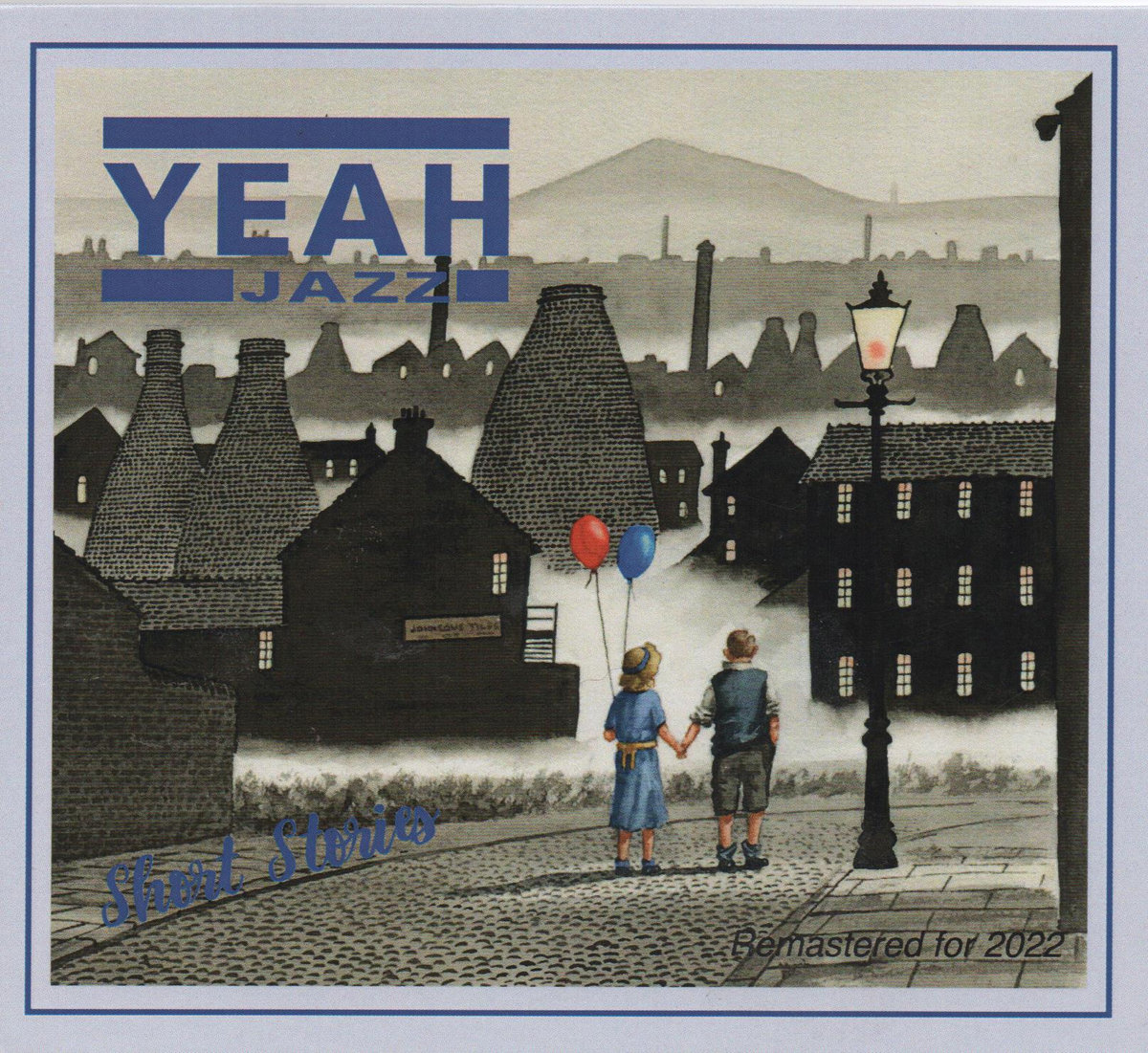
Some of my earliest memories of music are the songs from this album, playing on tape through the car stereo as we drive to a holiday rental in Wales, or blasting out of my dad's sound system on New Years Eve, or even a few nights before, heard live but not really consciously knowing it, as my uncle played with Yeah Jazz and his other various musical outfits at a local village club in celebration of his late December birthday. As my tastes evolved, I started to brush them off as 'just a local band', shunning their lack of clout and embarrassed by my ties to them, but over time I've reconnected. At uni, where I studied photography, they were a big influence for my final project (in which I created work about the tension I feel regarding my hometown), and I was able to draw upon the lyrics with a newfound insight and appreciation. Now, at the age of 34, I can see eye-to-eye with their vision and I feel like this music is in my blood.
 |
| A scan of the sleeve for the original 1991 cassette release of Short Stories |
As well as these two 'editions' of Short Stories, there have also been 3 further releases (Songs from Biscuit Town, Distant Trains and a further Short Stories, the latter released by a German label under the alias 'Big Red Kite'), with almost every song appearing at least twice between the 5 total records, but in some cases 4 separate times. Perhaps the purest way to do this would be to review separately the Big Red Kite version and Songs from Biscuit Town, which feature only a single song in common (which, ironically, shows up nowhere else!) - but it was important to me to include all the songs that I have the most nostalgia for in one go. Separate reviews would mean segregating two absolute standouts on Biscuit Town from the rest of the pack on Big Red Kite. This would feel very wrong because I know them together from the original tape (see above). Now, speaking of tapes...
Distant Trains is an interesting one because it never had a release other than on cassette, and it's almost like a revised/abridged version of the 1991 Short Stories tape. The liners, much like the original Short Stories, were printed on assorted coloured cardboard in black toner (the roads in the above scan have been inked in with coloured marker afterward - music doesn't get more artisanal than that!). Eight of the ten tracks on Distant Trains are taken directly from the original 1991 Short Stories, but with two notable additions; Don't Let Me Leave and the title track. These are songs I'm reluctant to bar from my review; because of how much shared content there exists between the two tapes, I think of them as virtually the same album. Ultimately though, I struggle to want to review either of the two original cassettes, because they are the least accessible. Nostalgia or not, I can't currently listen to them in this format.
So this brings me to the 2022 Short Stories remaster. The highest quality audio, most accessible (it's on their band camp, along with Songs From Biscuit Town) and the most comprehensive tracklist. Almost every song is represented from the original two cassettes I knew as a child. Two exceptions are Speak To Me and Times Change (now only on the new edition of Songs From Biscuit Town) - these I can admittedly sacrifice as I'd basically forgotten about them, thanks to relying on CD rips and the original CD tracklist for Songs From Biscuit Town not featuring either (sidenote: this is so convoluted, it's probably not worth the three paragraphs' worth explanation). The final omission is Lorraine and Duane, which is a bit of a blow due to its uniqueness and exceptionally balanced structure, but not worth losing out on Distant Trains and Don't Let Me Leave for. Lorraine and Duane also features (consistently!) on Songs From Biscuit Town. The final consideration I had to make is that the rerelease inexplicably uses shorter edits of two songs (April and Hey Tray) - but I'm happy to take these as their original length counterparts.
My choice of edition effectively makes this something of a compilation review - but at this point, the lines are so blurred that a) it doesn't matter and b) I'm past caring.
- Billy Comes Of Age
- Orchids Bloom
- Thinking About You (aka Don't Stop)
- Hey Tray
- Distant Trains
- Don't Let Me Leave
- April (We've Changed)
- Rainbows
- Speak Softly To Me
- Brown Eyes
- The Great Escape
- Red Hot Polka (aka Lost At Sea)
- Angel
- Michael Forgive Me
- Cathy Smiles (aka A Summer's Day)
Average Score: 6.8
I'm not normally that responsive to lyrics, but I believe that Kevin Hand is unparalleled when it comes to storytelling - there's a reason it's called Short Stories. He has an ability with his ballads to go beyond simple narration; though the action and detail are definitely there, he's able to conjure such tangible atmosphere and utterly transport you to his headspace and his location, that his songwriting becomes straight-up poetry. And all with such unbelievable brevity. How does such a complete scene exist in my head when so few words are uttered? While it's true that I identify with much of his writing through living my own version of many of his experiences, there's also a lot I don't directly relate to. But through his colloquial yet carefully crafted lines, I really feel like I'm peering through his eyes and understanding his thoughts. Take the second verse of Hey Tray for example:
"Saturday, stuck in the launderetteNot noticing the notices she smoked another cigaretteAnd that photograph of you by the purple garage doorThat coat you found - you'd strut around - do you wear it anymore?And you know what? It's a funny thing
The older I get, the less I feel I'm living"
This is actually pretty jam-packed for a Yeah Jazz verse, but it's extremely immersive. Hand frequently manages something I always aspired to do within my photography, which is to make a moment out of nothing. And it's scattered all over this collection of songs. Everything from describing "eyes as blue as blue skies" in Distant Trains, the "smoke from the chimney reaching for the sun" in Billy Comes Of Age, to the goosebumps I get listening to Thinking About You, where "we hit the road at 90 and the sun rose all around me". These lines, alone, have an understated beauty to them; I'm there, I can see it. But drop them into the full context of the music and you hit gold. You truly feel it.
So with this in mind, let's go back to that lyric from Thinking About You. "We hit the road at 90" is sung to what I would describe as a runaway drum rhythm, the brightest, slightly sharply-tuned piano chiming in the background, and a guttural, Johnny Cash-esque guitar playing the exact three notes to make the whole sky appear to swirl around you as you hurtle down the motorway and the sun hits from what feels like every direction at once. The song is tinted with the warmest of orange hues, and you're almost physically shielding your eyes as golden rays seep in through every window. This is the very definition of atmospheric.
My absolute favourite song is Billy Comes Of Age. This is a damn-near perfect song. Again, extremely simple in overall structure, but the story is told in so many more ways than just the already poignant, empathetic and naively articulate lyrics. The song builds from a lone, low piano, pausing for breath at intermittent junctures, tom tom rolls that remind me of Joy Division's Atmosphere, and a doubling of pace that feels perfectly timed to propel the story and step into Billy's shoes. The music builds with the story, and eventually reaches an apex of absolute liberation. There's a two-second pause, and then it kicks back in, ever so slightly (1bpm perhaps) faster, and you can feel the excitement and freedom filling your body. It is sublime.
My single critique of Billy Comes Of Age (which, in all other regards, is a quintessential coming-of-age song on par with Trashcan Sinatras' Obscurity Knocks, which is of similar vintage) is Kevin Hand's vocal style. Initially, when Yeah Jazz started up in the early 80s, they had a very blanket, undefined sound that blended them in with a million other white male British indie setups doing essentially the same thing. As he established more of an identity in his writing, he did the same with his voice. On the plus, he was able to curate a very distinctive style that exaggerates his midlands intonation and brings an undeniable degree of authenticity to his performance. On the downside, however, he bleats. He literally bleats like a sheep. He ruins the most beautiful lines by trailing off his notes in a stammered, downward glissando, which sounds so affected and performative that it can take you right out of the ambience they've worked so hard to establish. In a song as strong as Billy Comes Of Age, this vocal idiosyncrasy does the least damage - but as soon as you notice it once, you hear it crop up all over the album, and it's like pulling the one thread that could threaten to unravel the entire outfit.
But even with these shortcomings, the songs, generally speaking, work. Order has never really mattered to me - perhaps this is more due to how many configurations I've known them in over the years, or perhaps this is more due to their nature, each one very much being a 'short story' that the album title implies. Orchids Bloom is the most solid individual track, very well balanced and performed, with a brilliant chorus that works as much as a pop record as it does a mainstay in their unique soundscape. April encroaches on this as well, but with a bit more of a swerve into the polka/bluegrass lean much of the music has. The Great Escape and Brown Eyes epitomise this facet of their music, and while this influence can be polarising, I don't think it sounds weird among their less genre-specific work. Don't Let Me Leave contains an ample dose of this influence, and is one of the songs I most identify with as someone who once left that same hometown in search of freedom and a life beyond its confines.
I have the least amount of nostalgia for the newer additions, Michael Forgive Me and Angel, neither of which existed on the cassettes I knew as a child. The former, in particular, I don't especially enjoy thanks to the rolling and slightly limp repetitive guitar strumming and rhyming pattern that verges on twee. The one track I've thrown off the cliff though is Cathy Smiles, which was a favourite of mine as a kid. I used to love its lively, catchy accordion refrain, but now I view it as corny with positivity, and definitely the weakest of bunch lyrically. My dad always liked to pick apart the line "the grass grew around she smiled as she sat down on it" but for me, nothing is more of a cringe than life being "just a bus ride away".
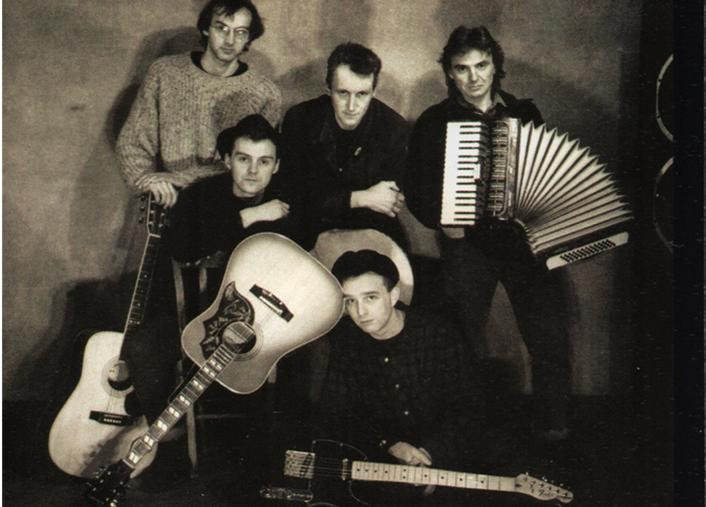
I knew I had a lot of feelings about this album but I didn't know until this review just how much I had to verbalise. I've been extra-critical in parts, but I think these assessments have ultimately been outweighed by the undeniable appreciation for the many, multiple aspects I love. Rather than summarising at this point to the extent I usually would, I'm going to do the unheard of and just straight up plug the band. They found a degree of commercial success in the 80s but this album and everything since have clearly been made to satisfy the creative buzz and for the love of performing, and if there is a reader viewing this who actually goes out of their way to give them a listen and find out for themselves what I'm on about, that will be worth a hundred times more than any review I could give.
So here's their bandcamp, go listen and purchase some music. And don't worry, it's not and has never been actual jazz.

No comments:
Post a Comment